New CA Seminar Introduces Students to Pharmaceutical Research
A new evening speaker series at Concord Academy, organized by junior Keira Pandya ’28, is introducing students to the science behind developing modern medicines. Through conversations with industry professionals, the Drug Discovery Seminar she’s supporting explores the innovation involved in bringing new drug therapies to patients.
Inspired by her parents, who both work in the pharmaceutical industry, Keira created the series to share her interest in the field with the CA community and highlight diverse careers in science. “Drug discovery isn’t a one-size-fits-all path,” she says. “It’s an industry that can be adapted person to person, combining many interests and passions.”
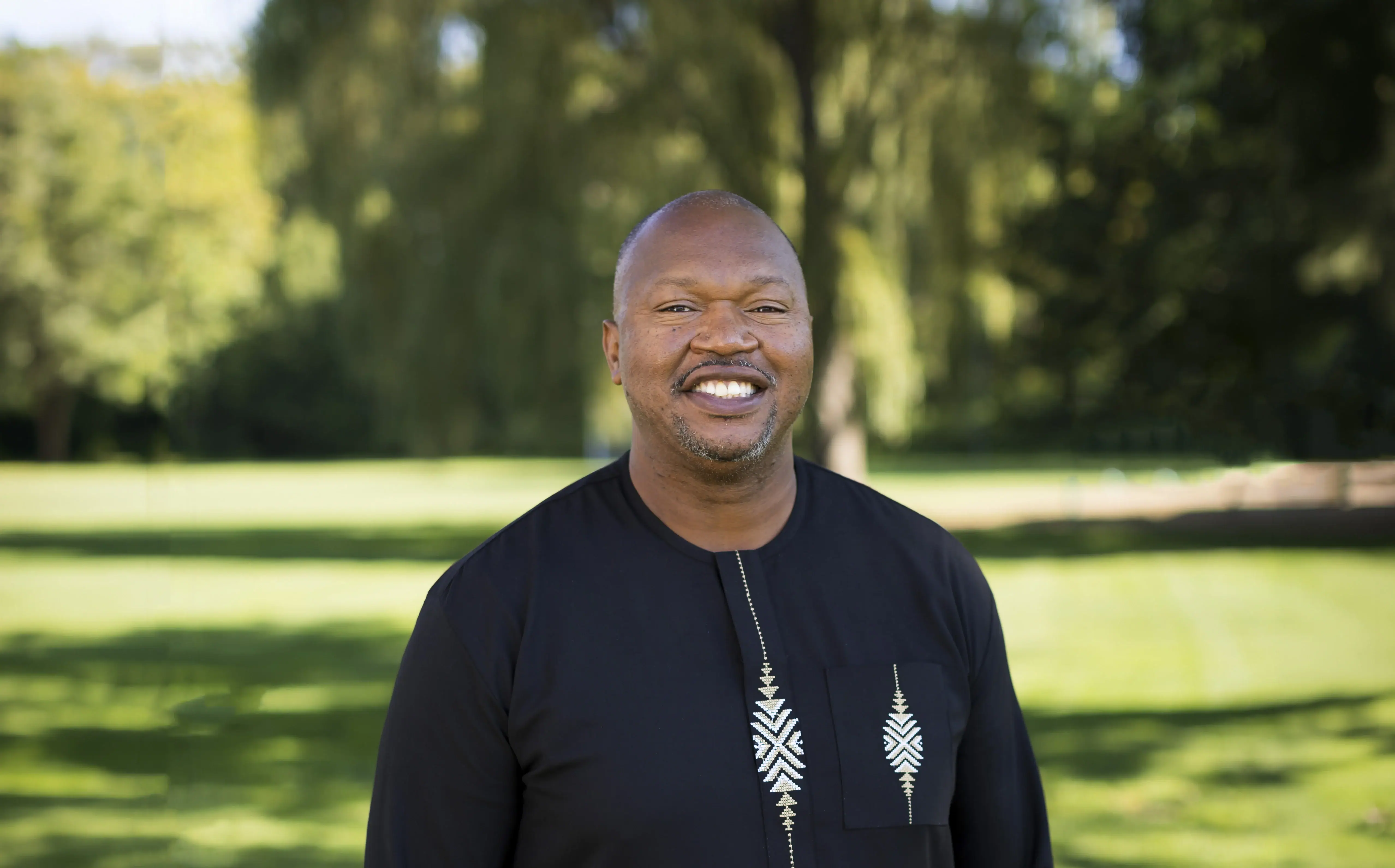
The introductory session on October 13 featured Will Tucker, head of CA’s Science Department and a chemistry teacher, who discussed his journey to becoming an educator and shared insights from his graduate research.
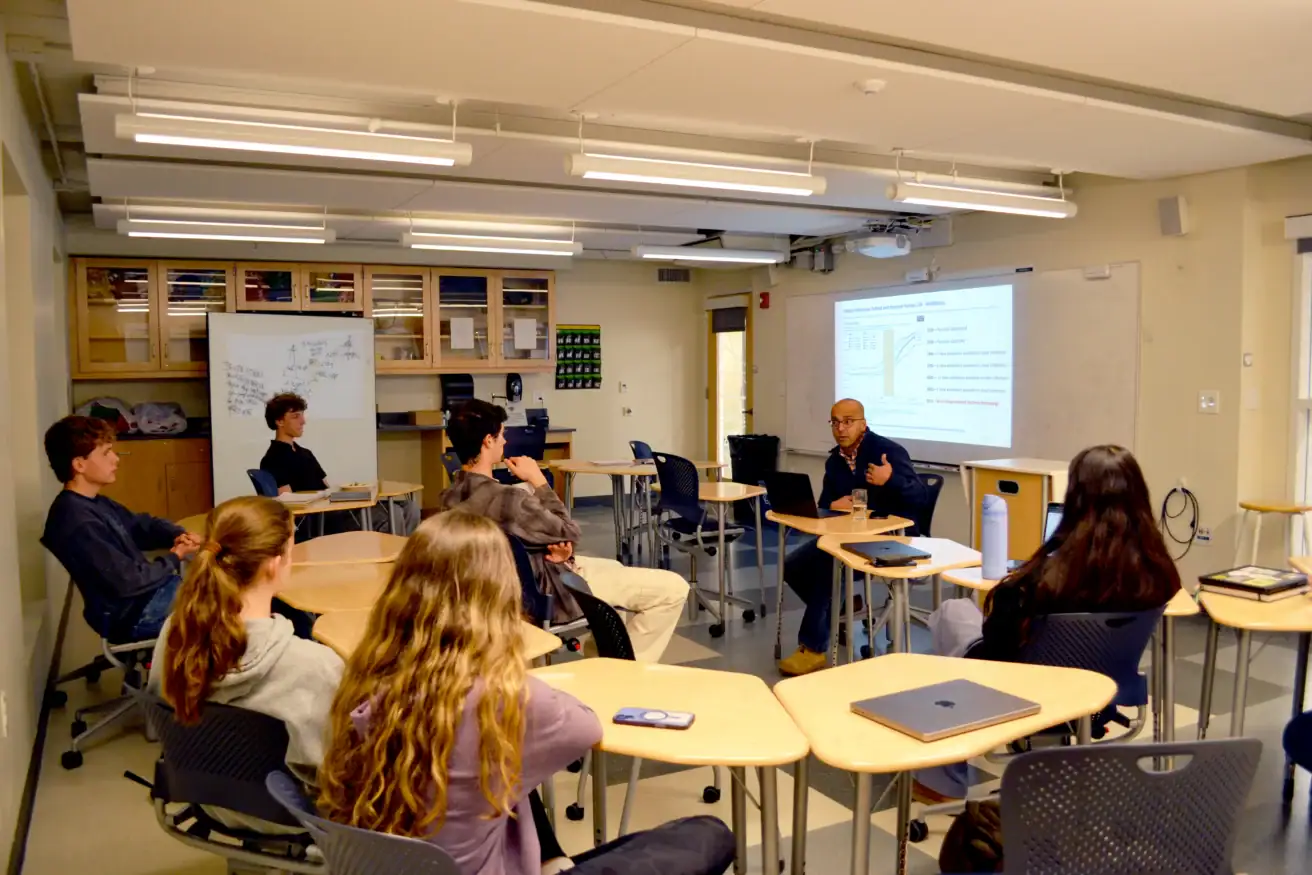
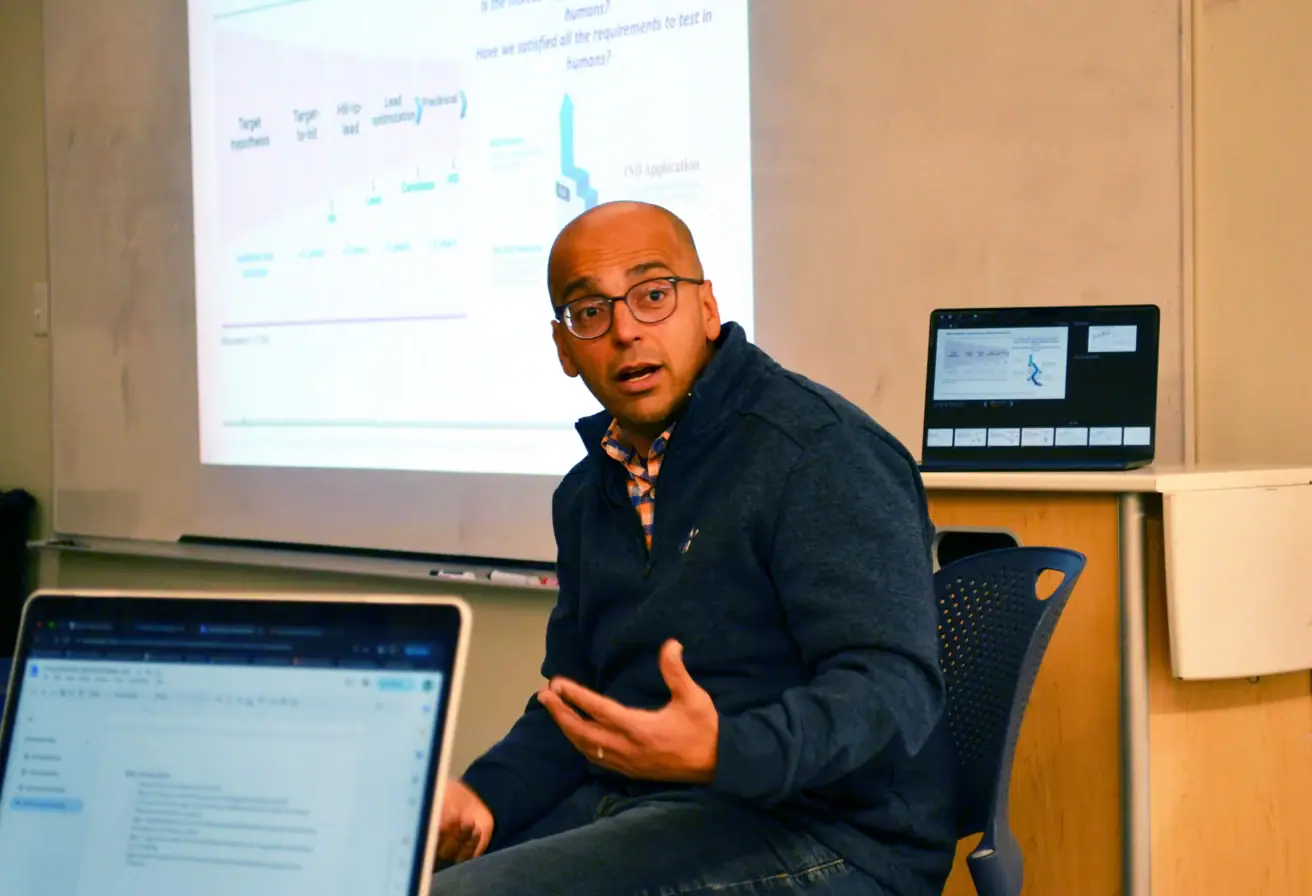
Keira’s father, Bhaumik Pandya P’28, a medicinal chemist with a doctorate in organic chemistry who works in the Boston-area biotechnology industry, spoke at the subsequent seminar on October 22. Pandya spoke with students about his career and the complexities of drug development.
He shared that his interest in the field was shaped by seeing a family member navigate illness, which motivated him to pursue a career in developing more effective treatments. The goal of creating better outcomes for patients carried through his lecture at CA.
During the session, Pandya discussed how modern medicines have evolved. He explained how antibiotics made it possible to treat infections that were once frequently fatal and how HIV treatments progressed from complicated medication schedules to combination therapies requiring fewer pills. These examples illustrated how pharmaceutical research can improve both life expectancy and quality of life.
Pandya’s talk also introduced students to medicinal chemistry, the study of designing and improving molecules that interact with biological systems to treat disease. Pandya explained that drug discovery involves identifying a biological target, developing a potential compound, testing its effectiveness and safety, and repeatedly modifying its chemical structure to improve its performance.
He described this process as a “design, make, and analyze” cycle. Scientists use the results of experiments to refine their compounds, often repeating the process many times before identifying a promising drug candidate. “If you like solving many different problems, this is definitely the field for you,” Pandya said.
Pandya stressed that the process depends on common trust among professionals with different areas of expertise. In addition to chemists and biologists, the industry involves researchers who study how medicines move through the body, specialists who evaluate potential side effects, clinical scientists, business professionals, and intellectual property attorneys. “There are lots of different ways that you can contribute,” Pandya said.
For students interested in science and healthcare, the seminar is offering a closer look at how classroom concepts translate into real-world discoveries. The series will continue throughout the year; Keira plans to bring additional speakers to campus to explore both the scientific and business development sides of the pharmaceutical industry.
Ultimately, the aim of the seminar is to show students that science is a collaborative industry shaped by a wide range of perspectives. Through these conversations, Keira hopes to help her fellow students envision how they can find their own place in an industry dedicated to improving lives.