Reconnecting With His Homeland, CA’s Mbakwe Okafor Spearheads an Innovative, Collaborative Approach to Seeking Students in Africa
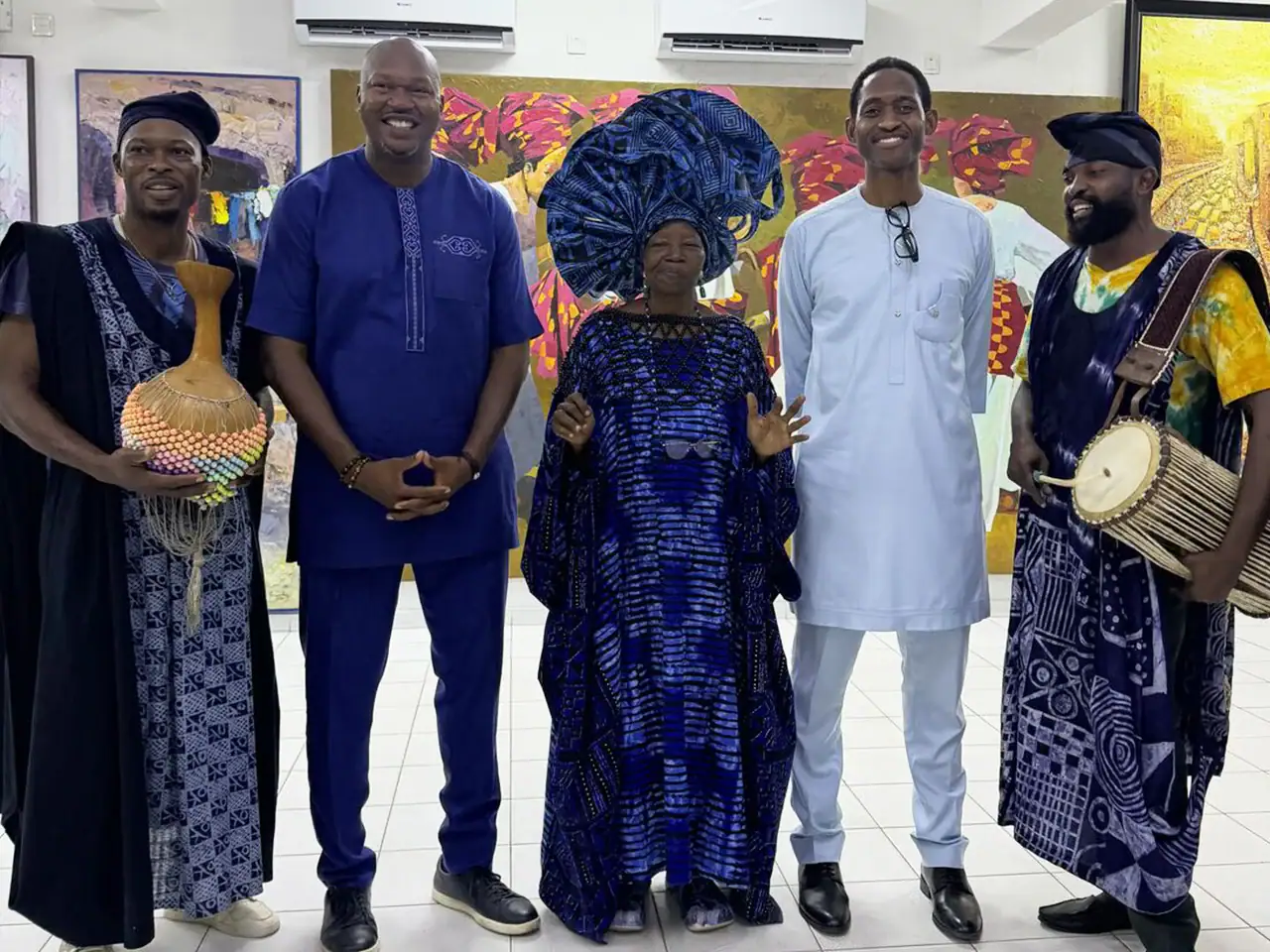
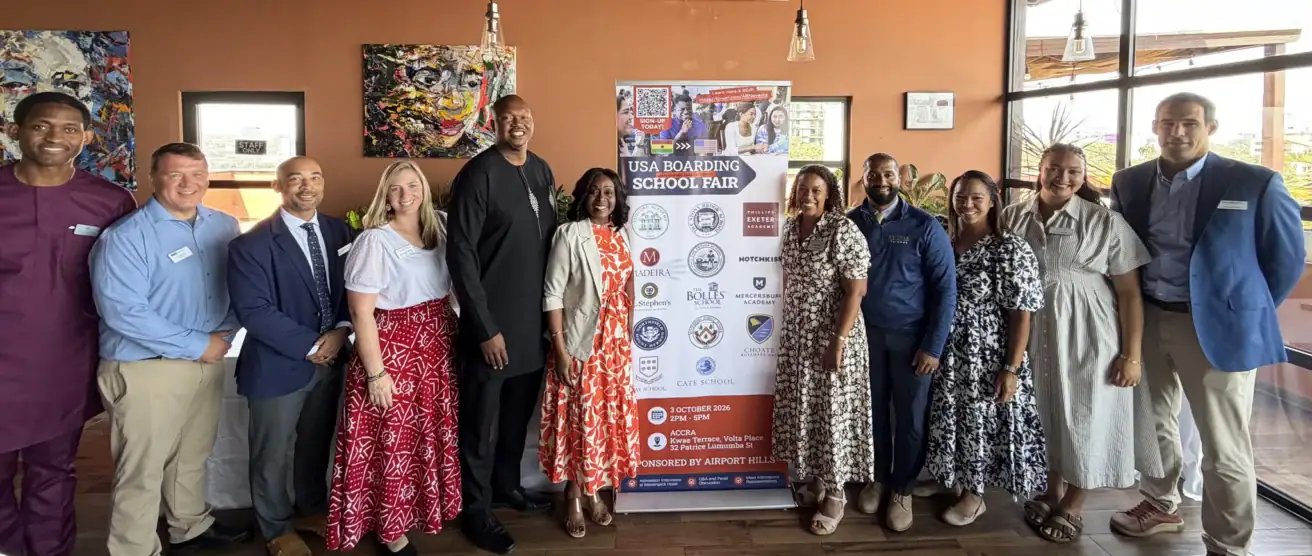
In October, Mbakwe Okafor, CA’s chief enrollment manager, returned from his third annual trip to Africa with a broader perspective on meeting prospective families where they are. Since 2024, he has traveled to Lagos, Nigeria, and Accra, Ghana. Initially, he spearheaded this West Africa trip with colleagues from Phillips Exeter Academy in New Hampshire, the Stony Brook School in New York, the Hotchkiss School in Connecticut, and the Madeira School in Virginia. This year, he returned with a larger contingent of colleagues from nine additional boarding schools: the Fay School and Northfield Mount Hermon in Massachusetts, Mercersburg Academy in Pennsylvania, the Bolles School in Florida, Choate Rosemary Hall in Connecticut, St. Stephen’s Episcopal School in Texas, the Peddie School in New Jersey, and Cate School in California. Many of the travelers, including Okafor, added stops in a third time zone to their itinerary, visiting Johannesburg and Cape Town in South Africa.
“The collaborative spirit of this work is important,” Okafor says, admitting that cooperation among competitor schools is “a little countercultural.” Still, he says, their engagement has been most successful as coordinated outreach rather than recruitment for specific schools.
The schools that send representatives in person to discuss the commonalities among U.S. boarding environments all benefit from increased visibility. Families from these regions, with stronger ties and easier travel to the United Kingdom, also benefit from learning about additional educational options in the United States. Aware that some African families may be familiar with America predominantly through the media, which often shows the country at its most extreme, Okafor and his colleagues spoke about holistic student care, safety and security, and the breadth of academic, artistic, and athletic engagement in their school communities, as well as varied college pathways.
“In order to change the narrative, we have to be proximal,” Okafor says. Initial data reflects an approach that’s working: Some of the first schools that sent representatives to meet Nigerian and Ghanaian families face to face saw a surge of applications from these countries within a year. Okafor hopes that soon the group will be able to expand its reach to Nairobi, Kenya; Dakar, Senegal; and Kigali, Rwanda.
With a deep appreciation for the strong value placed on education in the communities he visited, Okafor could also share his personal experience as a Nigerian who went on to study at an independent school. Born and raised in Lagos, he emigrated to the United States at 8 with his family, who settled in New York City. Having previously attended private schools, he says the public school he first encountered in the South Bronx, a couple of blocks from Yankee Stadium, was “a huge culture shift.” While he adjusted to different weather, food, clothing, and religion, his Igbo family kept a traditionally Nigerian home.
Okafor did well academically and began to paint and draw. His aunt was an architect, and he’d often dabble with her tools. Thinking that would be his pathway, he applied to the three most prestigious art high schools in the city and was disappointed when he wasn’t admitted. But Christopher Columbus High School introduced him to basketball, a sport that opened the door for him to attend the Berkshire School in Sheffield, Mass., the following year. On that rural campus, another adjustment for a city kid, he found a global cohort of peers, made lifelong friendships, and continued playing basketball.
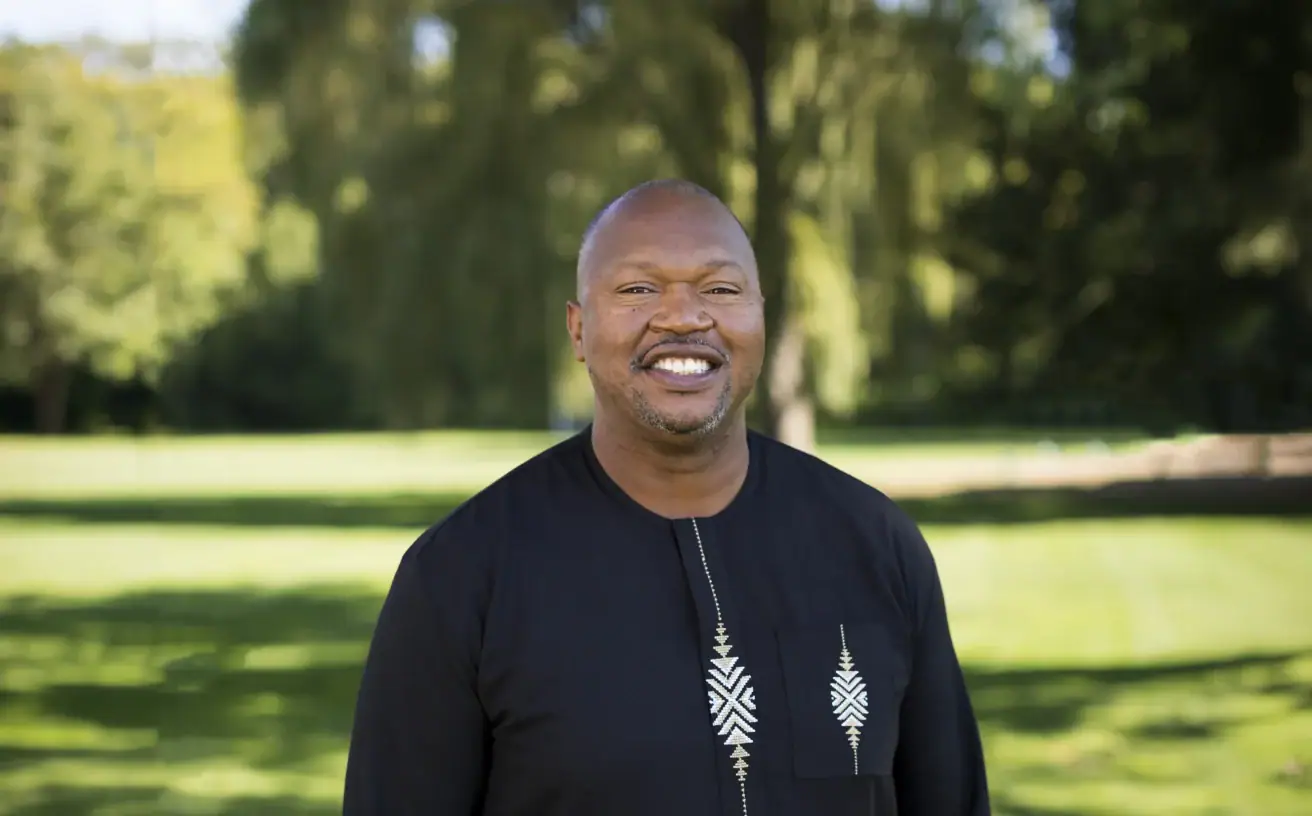
When several colleges offered him scholarships, his mentor, coach Jim Couch, who founded the Dyckman basketball program in New York City, wisely and realistically reined in Okafor’s NBA hopes, advising him to attend Holy Cross, the school with the strongest academic program. Okafor says the support of other mentors during his undergraduate years there changed his life. While earning a master’s of science from Northeastern University, he became the inaugural director of wellness at Codman Academy, a public charter school in Dorchester, Mass.; for his work there, the Boston Globe named him one of the “top 100 innovators in education,” and he also earned a Gold-Level Massachusetts School Wellness Award. (He currently serves as president of the academy’s foundation board.) Starting a family led him back to the independent school world and into admissions, first at the Fessenden School in Newton, Mass., where he coordinated multicultural recruitment, then at Phillips Exeter Academy, where, as the associate director of admissions and multicultural outreach, he led a strategic effort to scale outreach to nontraditional families and historically underrepresented communities.
Okafor was drawn to CA by the opportunity to lead his own office. “I had a lot to learn about CA’s character, personality, and how it functions,” he says, “but I knew the school was nimble and thoughtful and that it had a transformative leader” in Head of School Henry D. Fairfax.
At CA, recognizing the intersection of diversity and institutional sustainability, Okafor shifted the admissions framework to center a student-seeking focus and introduced a new role coordinating multicultural outreach. He mentors his team in actively recruiting students who can strengthen the community across any number of academic, artistic, athletic, and social parameters. “Parents are sacrificing something for their child to be with you for three or four years,” he says. “We have a contract with them to take the whole child. We’re not asking you to come and assimilate; we’re asking you to come and transform the school.”
He says that it’s readily apparent to prospective students who spend two or three hours on campus whether it’s a good match for them, but that, for families who aren’t able to visit in person, “a website can’t help you meet the people.” So he takes seriously the responsibility of representing CA, particularly in other countries.
Concord Academy offers students a great deal of flexibility; it’s a school where students can find success in many different ways, Okafor says. But he sees some commonalities in students for whom CA is life-changing. “Someone willing to take some risks and put themselves out there will get the most out of the CA experience,” he says. “They will discover new things about themselves that they didn’t know, and they’ll grow in ways that they never imagined.”
Similarly, he points to students who value diversity. “A student who’s willing to understand that their viewpoint is just one of many” tends to benefit from the CA community’s emphasis on listening, he says. “They embrace the complexity of who we are, the complexity of the world, and the complexity of the students around them.”
He adds that CA’s academics are rigorous, and a growth mindset helps. “You’re going to work hard, not for the sake of rigor itself but because you love learning, and there’s a depth and breadth you need to follow if you truly want to understand these concepts,” he says. “Those who get the most from CA and go on to impact the world are those who truly go deep and go wide.”