
Winter Dance Project: A Spectrum in Motion
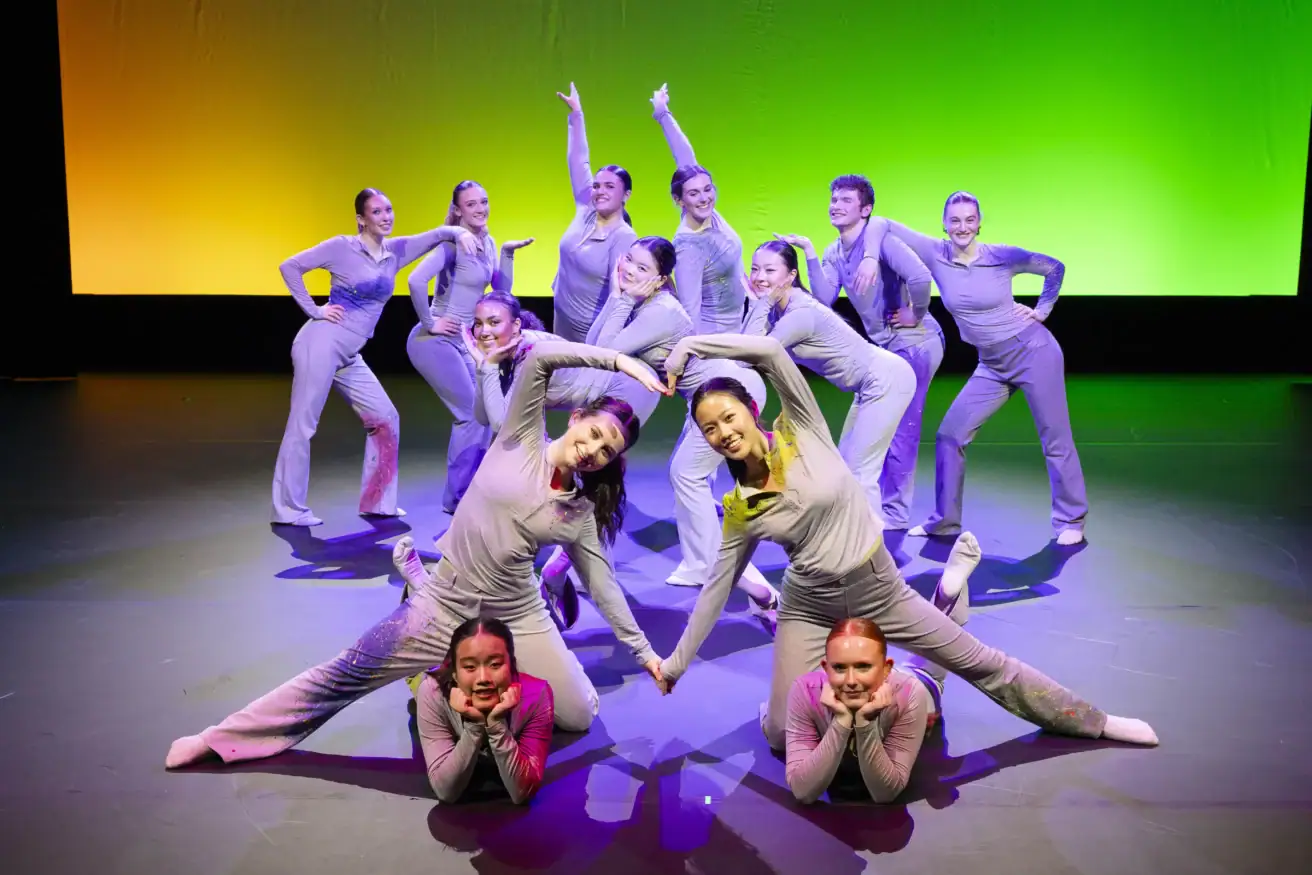
February 28 and March 1, the Performing Arts Department presented The Ballast of Iridescence, choreographed by dance teacher Patrick John O’Neill and the students of the Concord Academy Dance Project. The first dance production in the Centennial Arts Center’s Hammett Ory Theater offered a meditation on growth through the metaphor of color.
O’Neill approached the piece from a child’s perspective. “We usually think of play as something weightless, like a balloon drifting up or a parachute catching a breeze,” he says. “But Maria Montessori reminded us that play is truly the ‘work of the child.’ It takes structure, intention, and real effort. Since our society often asks us to trade our sense of wonder for adult rigidity, this piece asks how we carry the lightness of our beginnings into the gravity of our lives.”
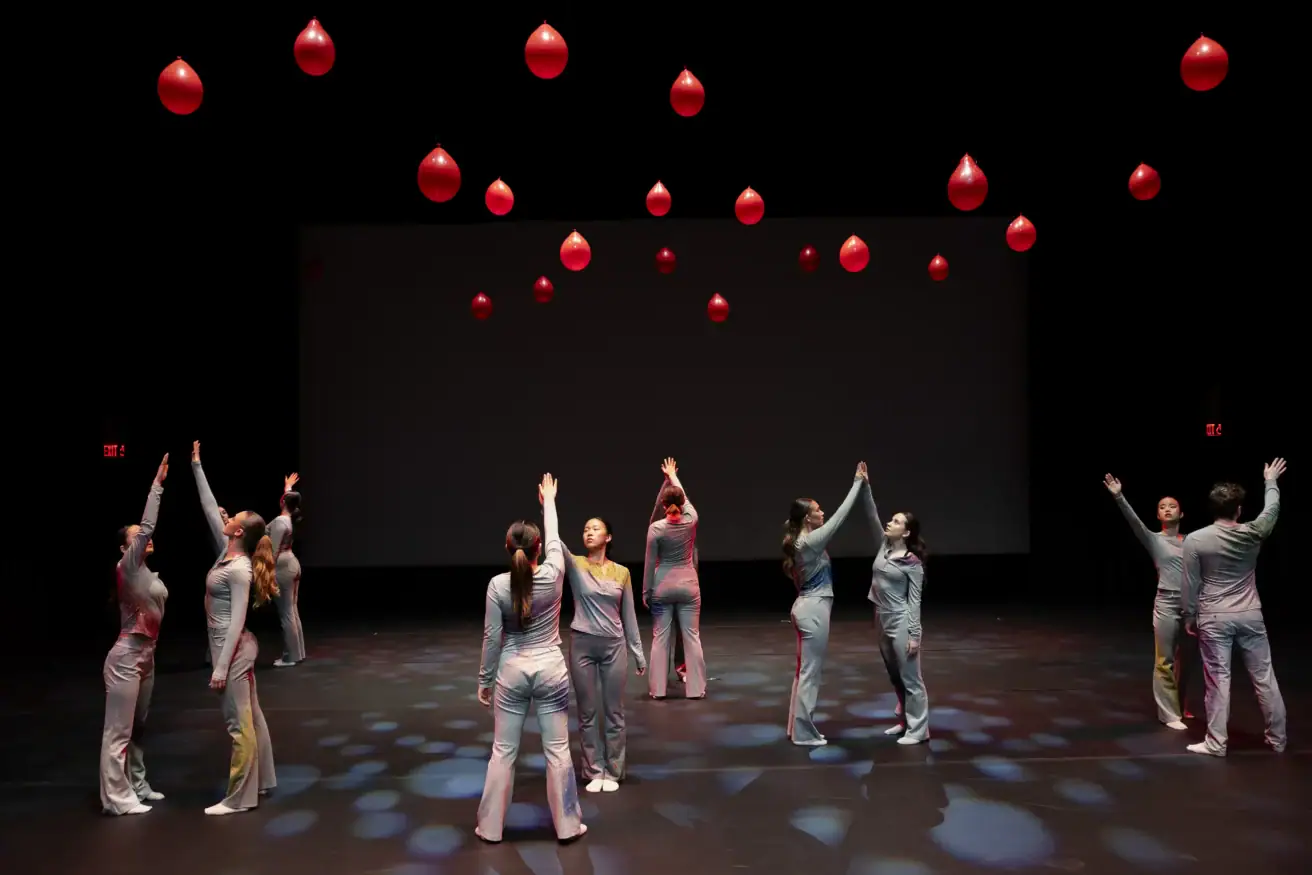
At the start of the performance, a canopy of red balloons covered the stage floor as a lone dancer, Astrid Erdos ’26, stepped onstage, gazing upward in wonder. As the balloons slowly lifted and floated away, the rest of the ensemble, adorned in paint-splattered costumes, joined her for a dance set to a lyrical rendition of “99 Red Balloons” by Nena. The soaring choreography was rich with jumps and sweeping floor work that filled the space with a sense of possibility.
O’Neill credits the dancers as collaborators, praising their ability to shift from syncopated jazz to grounded modern, embodying the full spectrum of emotion in the piece. “Each dancer was given the opportunity to contribute to the choreography,” Astrid says. “Oftentimes, we would split up into groups to choreograph small sections, and then we would put each group’s choreography together to make a longer dance. With this process, every dancer was able to sprinkle in their unique style.”
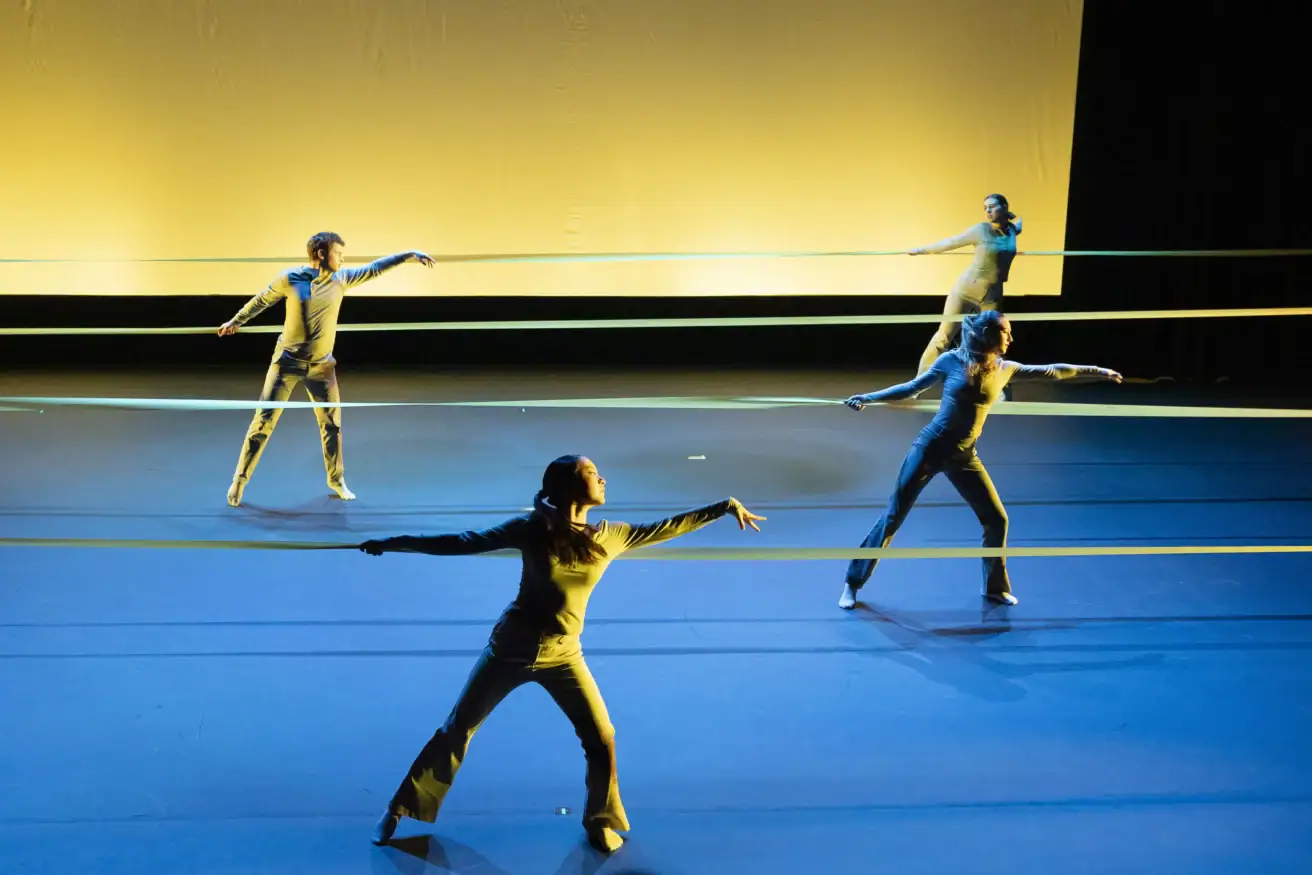
The performance moved through an entire visual spectrum. Warm hues gave way to cooler, heavier tones. A high-energy number to Harry Hudson’s “Yellow Lights” featured four dancers who transformed simple yellow ribbons into dynamic ballet bars that they pliéd on, weaved beneath, and even cartwheeled on top of.
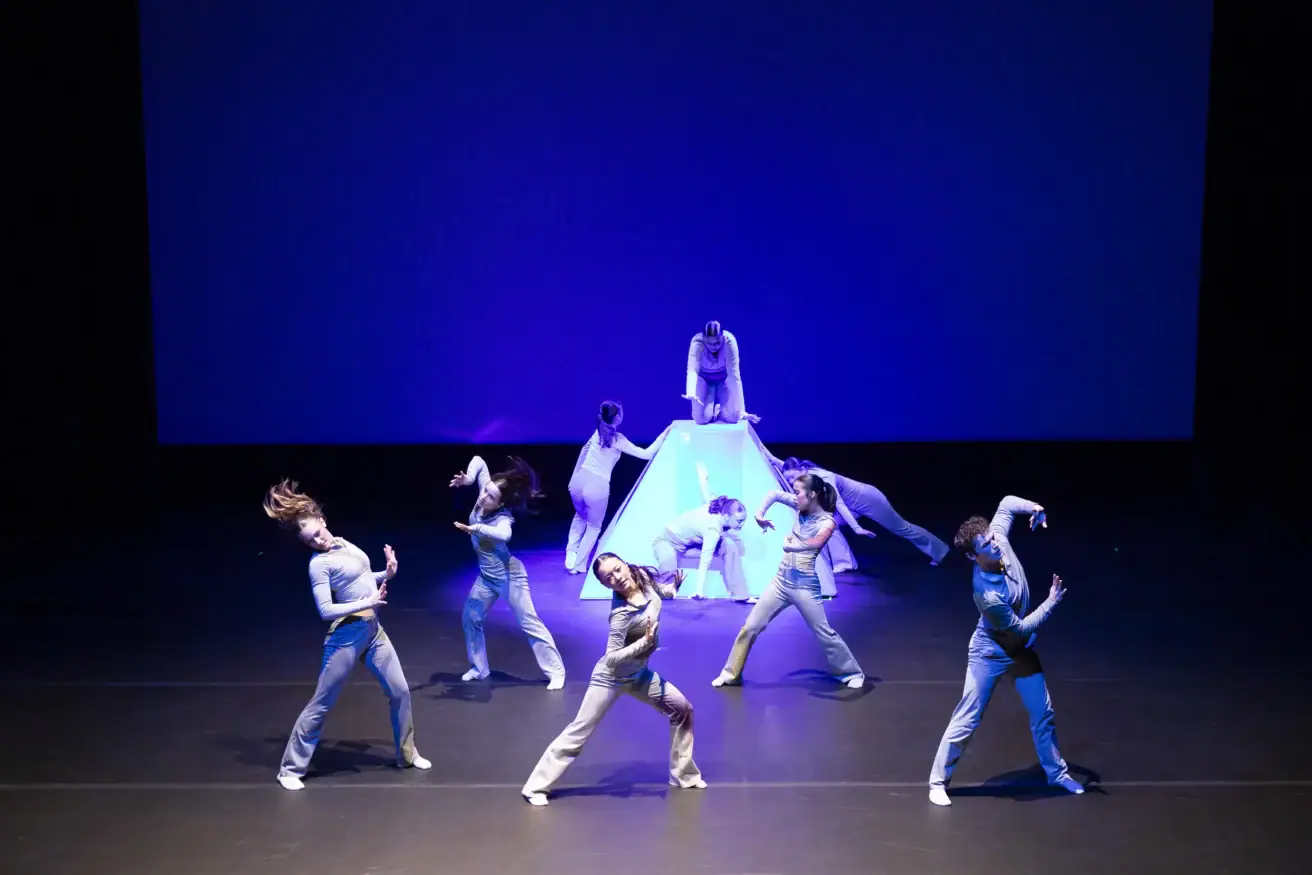
Later, a dance to Lorde’s “Green Light” drove sharp, symmetrical choreography. A number set to “Dark Blue” by Jack’s Mannequin included a blue glow-in-the-dark pyramid. Dancers climbed, slid down, and ricocheted off its illuminated planes.
In a solo inspired by a writing assignment she completed in O’Neill’s Dance Technique class, Aleki Zdraveski ’26 gave an introspective performance set to “Dark Taupe” by Arden Forest. In the piece, she reflected on the experience of creating work in her ceramics class and the emotional impact of others’ reactions to it. Her writing also drew connections to choreographer Pina Bausch, who believed that audience response is an essential part of a choreographer’s work. Through measured yet powerful movements, Aleki translated this reflection into a deeply personal dance.
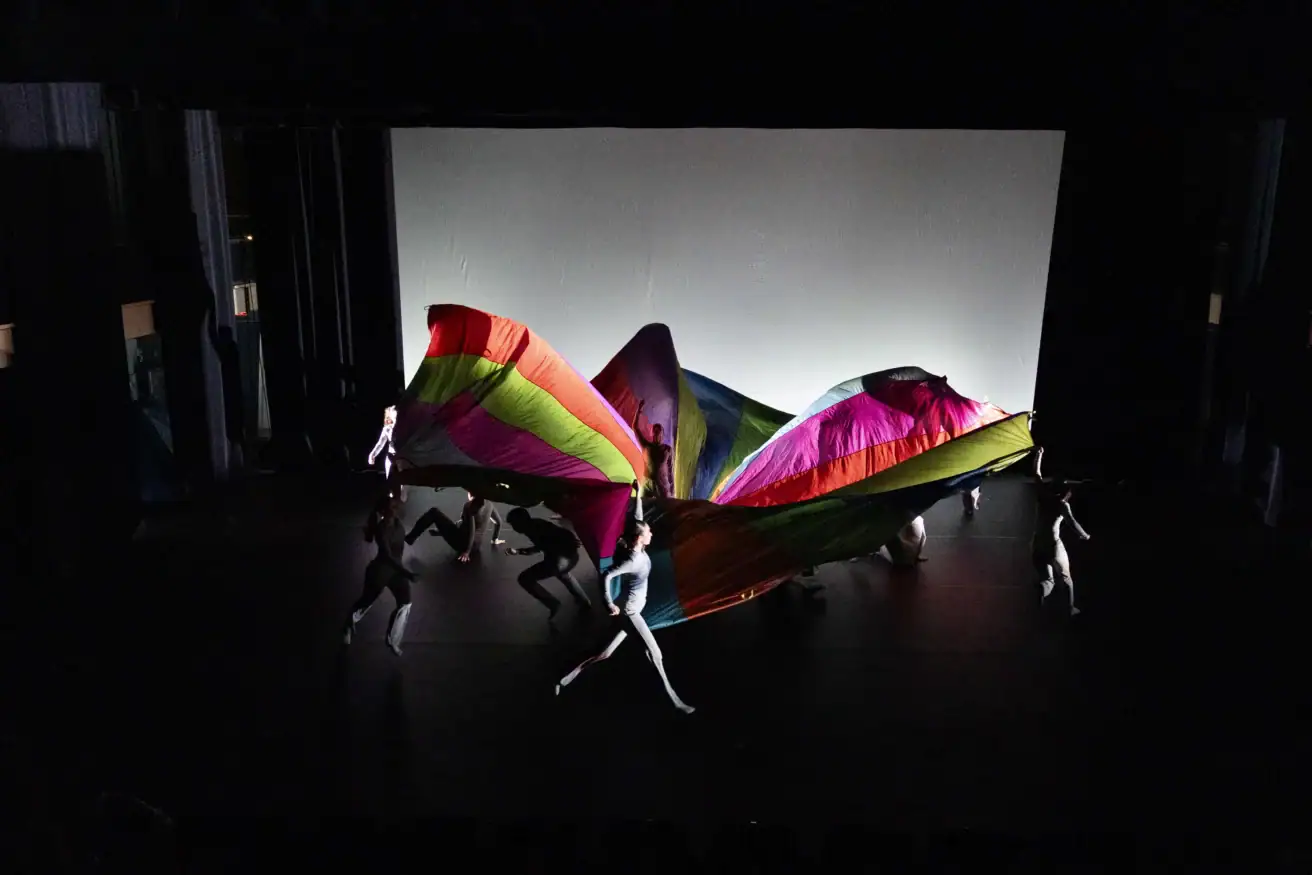
From that stillness, the full cast surged into a piece set to an instrumental version of “Paint it Black” by the Rolling Stones. A rainbow parachute billowed open as students darted beneath it, reframing black not as emptiness, but as convergence—the gathering of every color into one kinetic whole.
In the closing number, the red balloons returned and the ensemble assembled for an upbeat finale that echoed the wonder of the opening scene. “For me, this piece is more than just a map of getting older. It is the trajectory of how we learn to carry what we feel,” O’Neill says. “We begin with the raw discovery of an emotion, move into the hard work of understanding its power, and finally reach a quiet place of acceptance where those feelings truly belong to us.”
The production’s scale reflected the ambition behind it. The talented design team brought the world of the story to life, including Scenic Designer Jessica Cloutier-Plasse, Sound Designer Nate Tucker, Technical Director James Williston P’28, and Production Manager Deanna Jane Stuart. The new Centennial Arts Center Kingman Support Shop made large-scale props, including the pyramid, possible, while the new theater’s catwalk system allowed for the installation of the balloons.
Reflecting on the process, Astrid says the dancers’ shared energy helped sustain the production through months of rehearsals. “My biggest takeaway from CADP is the power of a positive mindset,” she says. “The high energy and constant enthusiasm are what fueled this production and kept it moving forward. The smiles, high-fives, snaps, and cheers that we each offered to each other created a supportive environment that I hope to find as I continue dancing in new spaces in the future.”
For O’Neill, the most powerful element of The Ballast of Iridescence was not the color or choreography, but the connection it created. “At its heart, dance is about restoration,” he says. “It is a unique practice because it requires us to be in this room together. I hope we find some collective healing in being here. We are all just trying to keep our balloons afloat.”
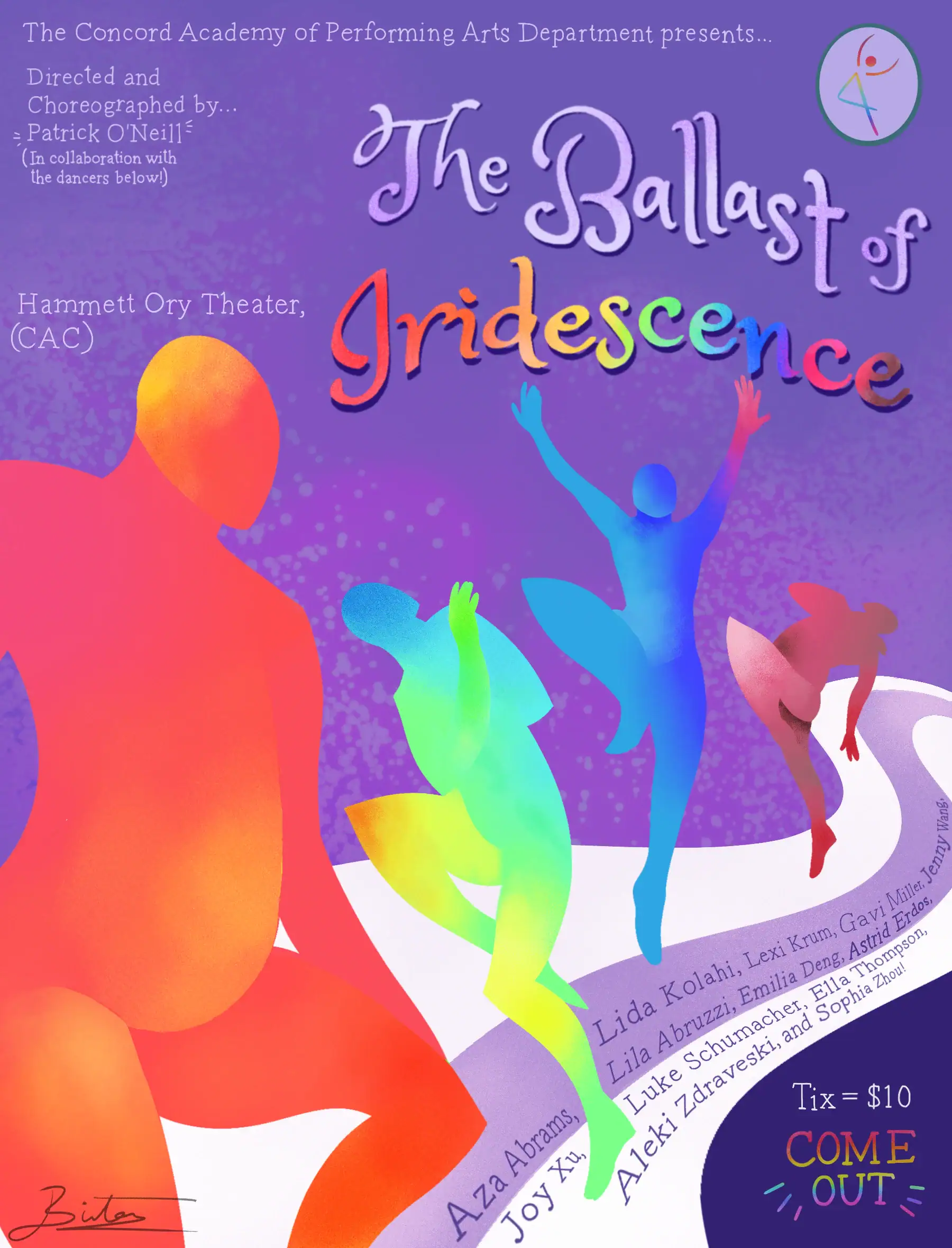
Poster artwork by Bintou Sacko ’26