
A Recipe for Discovery
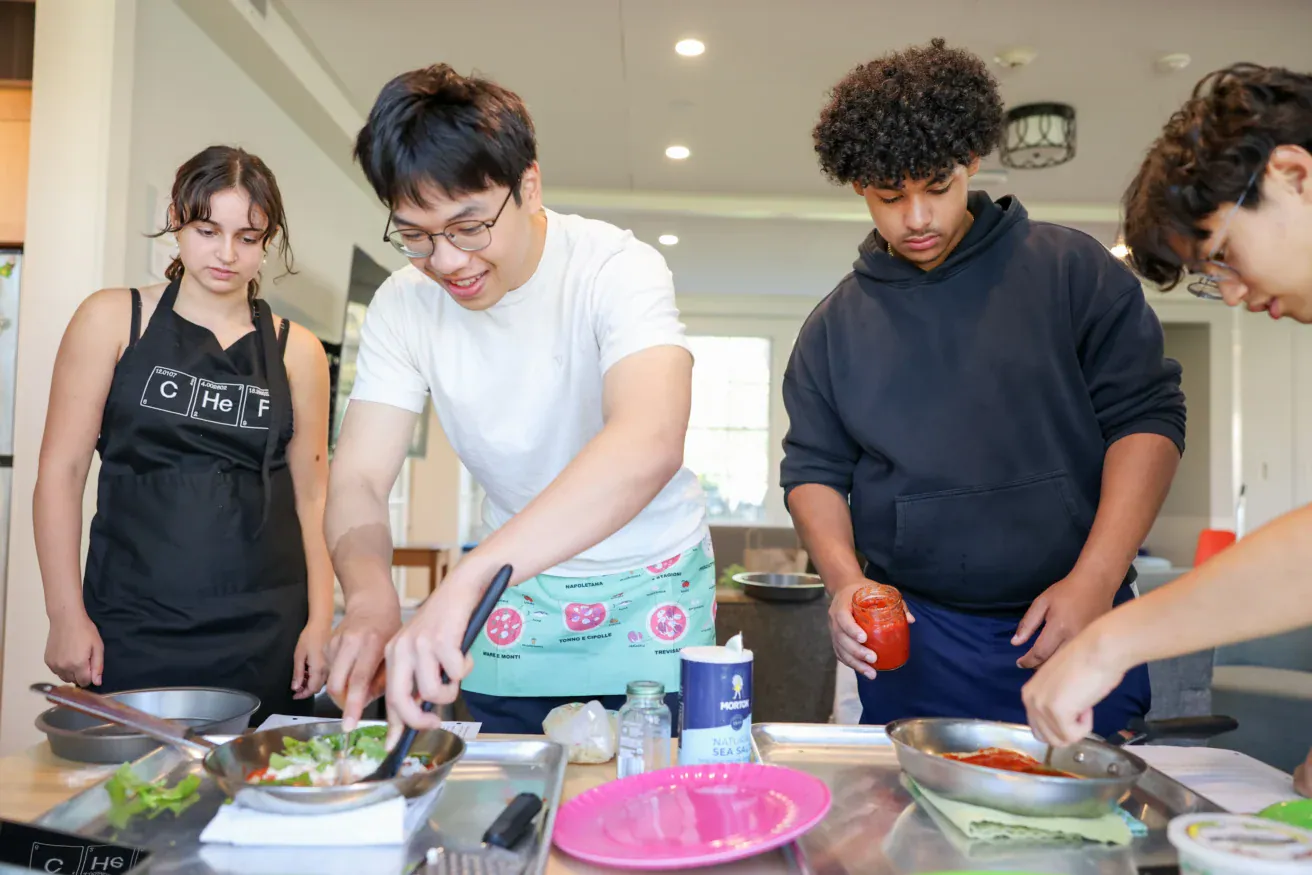
In the Chemistry of Cooking class taught by science teacher Susan Flink P’13, every recipe is an experiment. As students mix, knead, and bake pizza dough, they learn how fermentation transforms simple ingredients into a flavorful crust. The kitchen becomes a laboratory.
This advanced chemistry course grew from Flink’s love of food science and her interest in Harvard’s science and cooking public lecture series. “I’ve always had a passion for food,” she says. She adds that her curiosity also stemmed from cooking for a child with allergies, which required experimenting with alternative ingredients and techniques: “We had to get really creative.”
The class focuses on the chemistry of macromolecules, including carbohydrates, proteins, and lipids, and how they change during cooking. Students explore heat transfer, acids and bases, emulsions, leavening, and browning reactions, among other culinary principles.
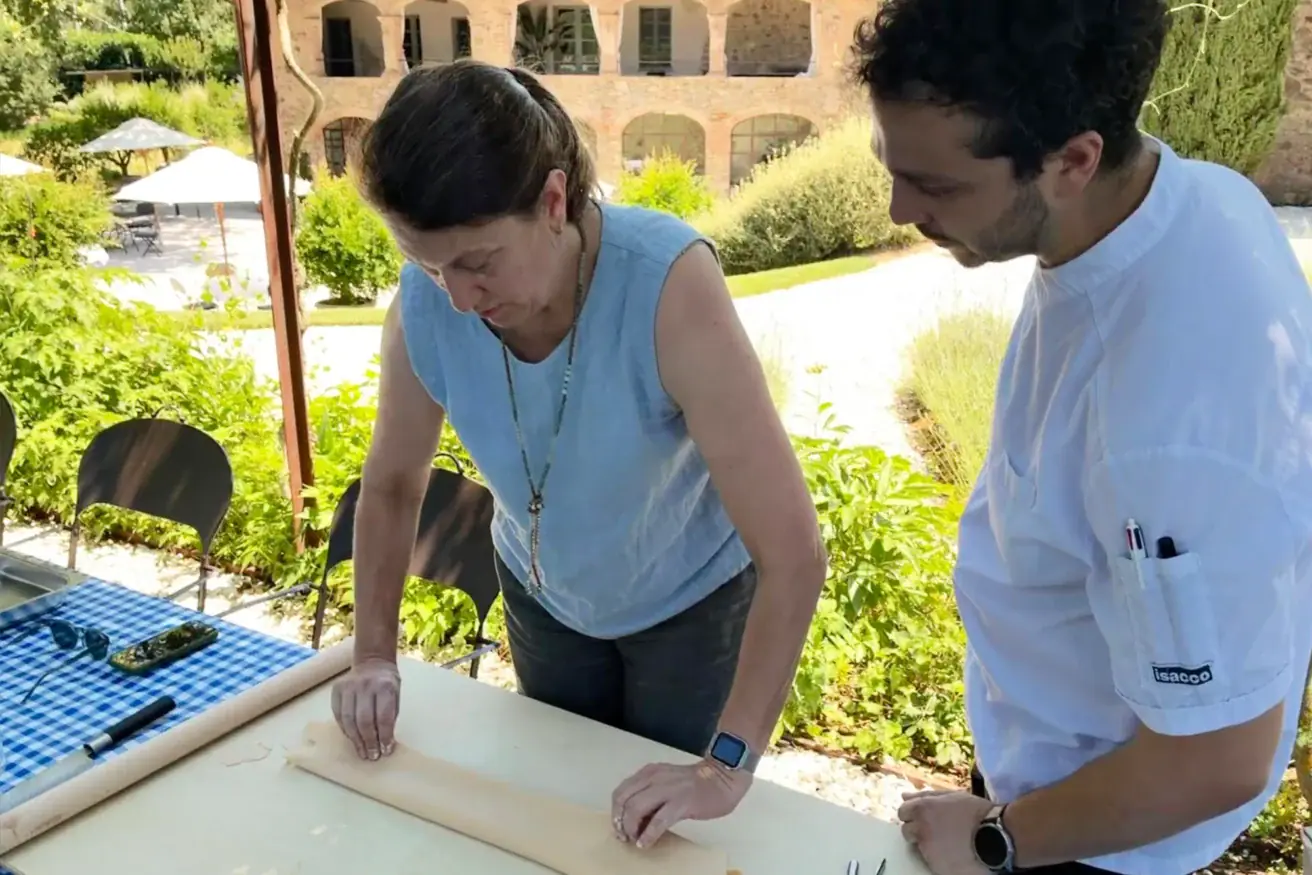
Flink draws inspiration from food traditions around the world. During a CA-supported sabbatical trip to Italy this past summer, she studied pizza making in Naples and pasta making in Umbria. Umbria, in central Italy, is known for its rustic, farm-to-table cuisine, while Naples, in the south, is celebrated for its vibrant street food.
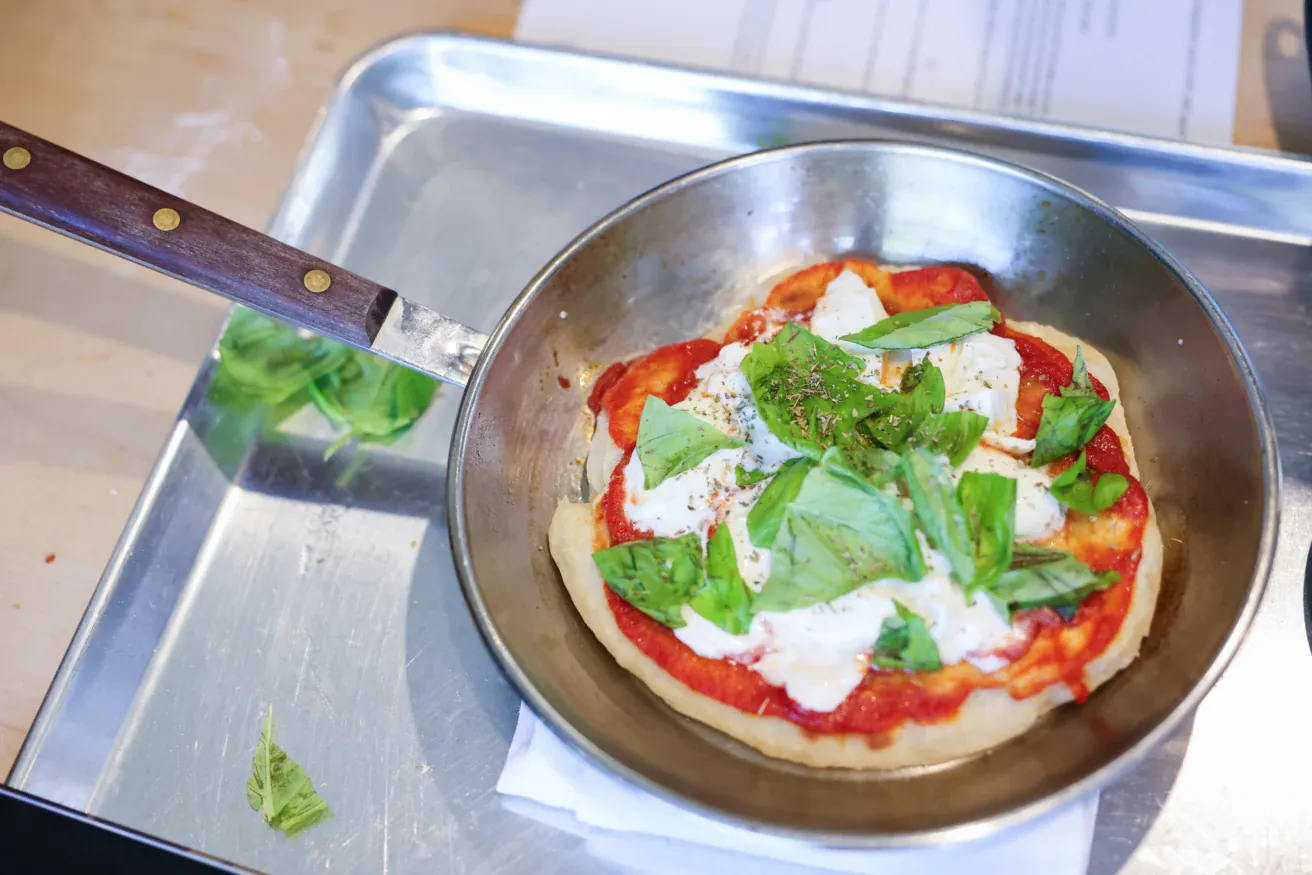
Studying alongside professional chefs gave her a fresh perspective on Italian cooking. “I learned to use fresh, ripe, delicious ingredients and keep it simple, while not being afraid to layer flavors and add acid and really good olive oil whenever possible,” Flink shares. The experience inspired her to expand her cast iron pan pizza lab.
This year, she introduced a Neapolitan-style dough, letting students compare how different flours and hydration levels affect dough texture and the finished crust. Students make pan pizza with bread flour, which develops a thicker crust, and Neapolitan pizza with 00 flour, which yields a thin center and a raised, airy rim.
Looking ahead, Flink hopes to build on the lab by collaborating with chefs from CA’s dining services and putting the dining hall’s newly installed pizza oven to use.
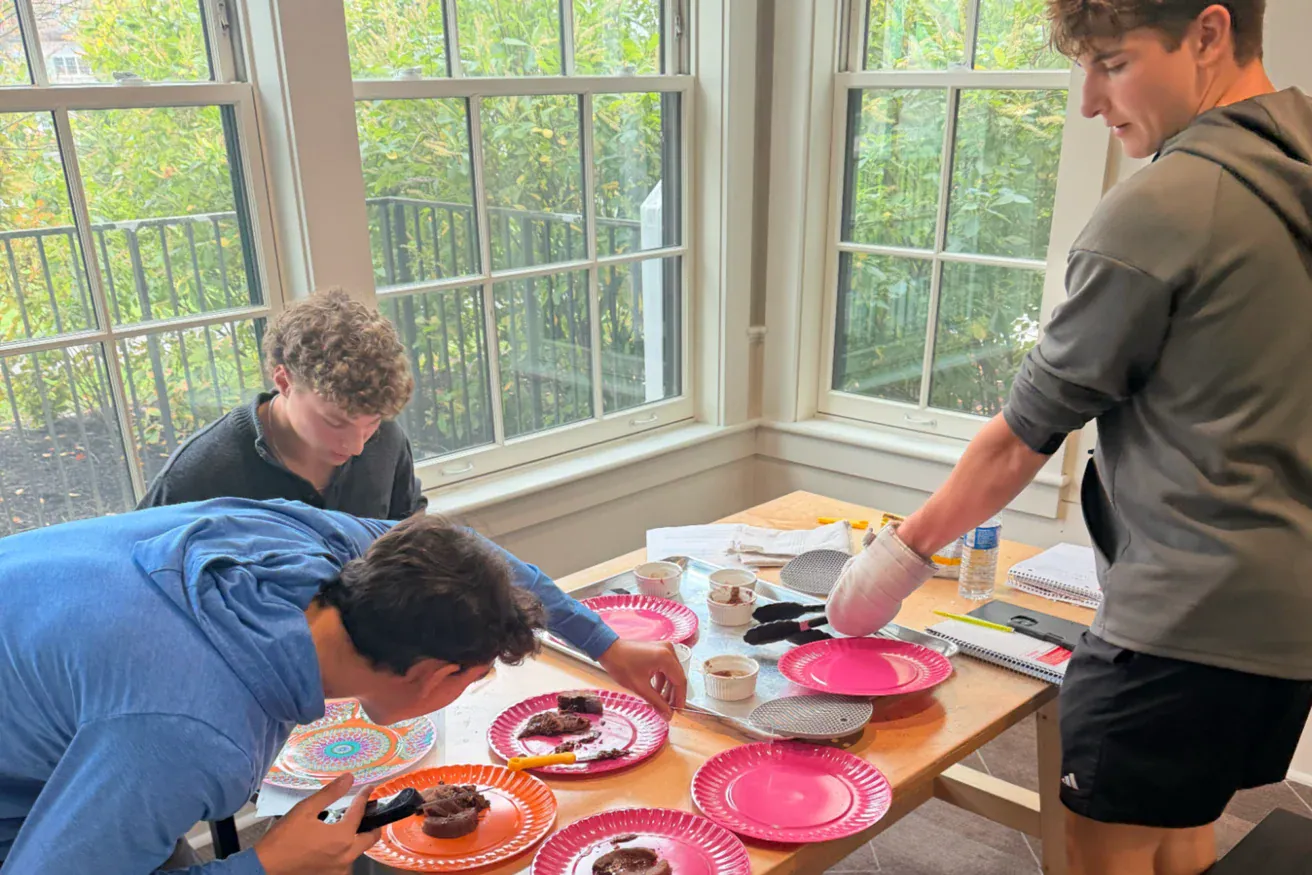
Another student favorite is the chocolate lava cake lab. Students divide batter among ramekins and bake each cake for a different amount of time, then compare their consistency and firmness. The experiment demonstrates how heat moves through food and causes proteins in the batter to coagulate, transforming liquid batter into solid cake.
A central skill in the course is recipe analysis. Students examine the purpose of each ingredient and instruction, then identify chemical and physical changes. Observation is just as important as measurement. “A good cook, actually a good chemist, really uses their senses,” Flink says.
For example, rather than cooking onions for a set amount of time, students learn to use color and smell to determine when they are ready. This involves the Maillard reaction, in which sugars and amino compounds react under heat, producing the flavors and aromas associated with browned food.
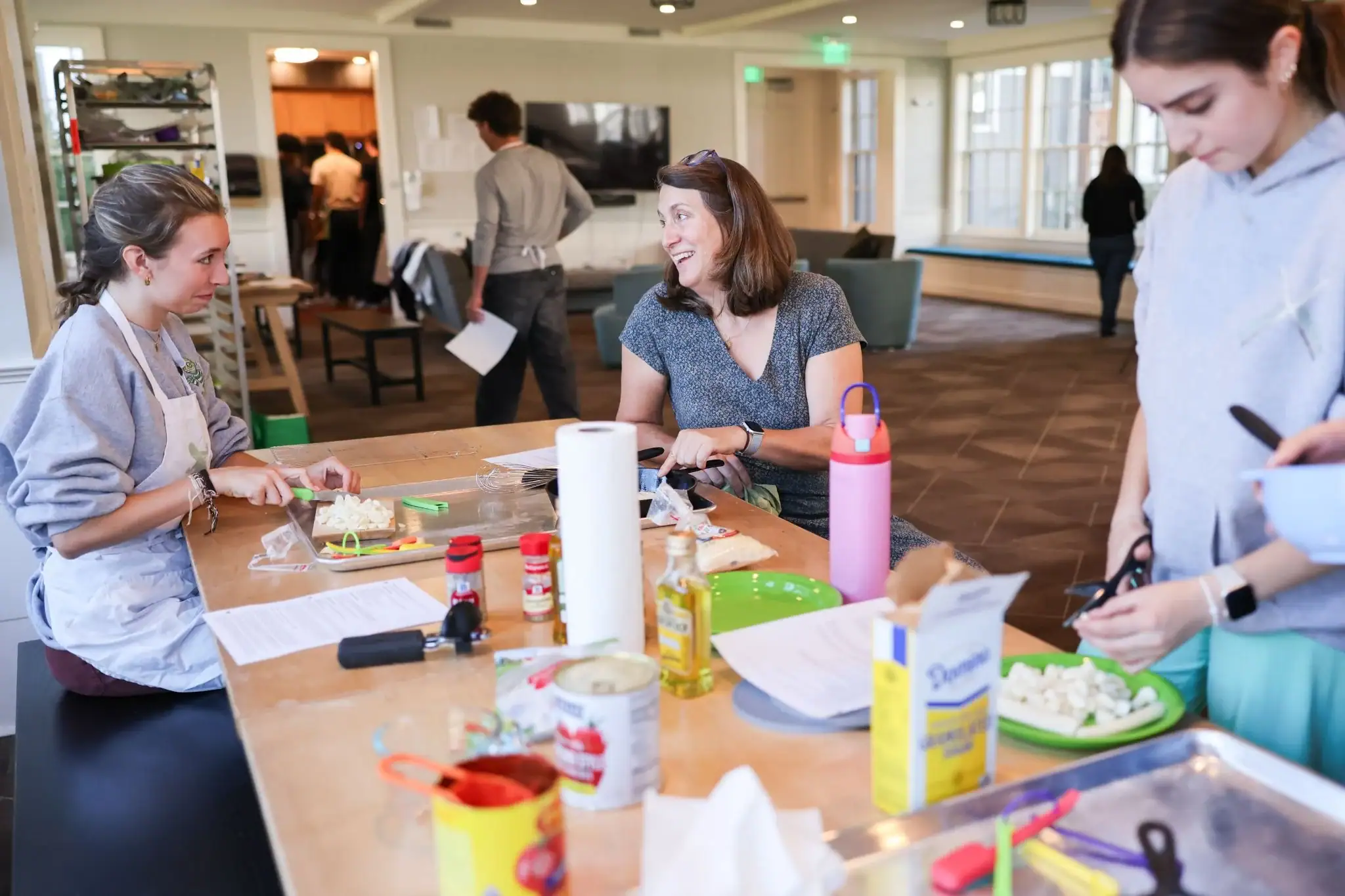
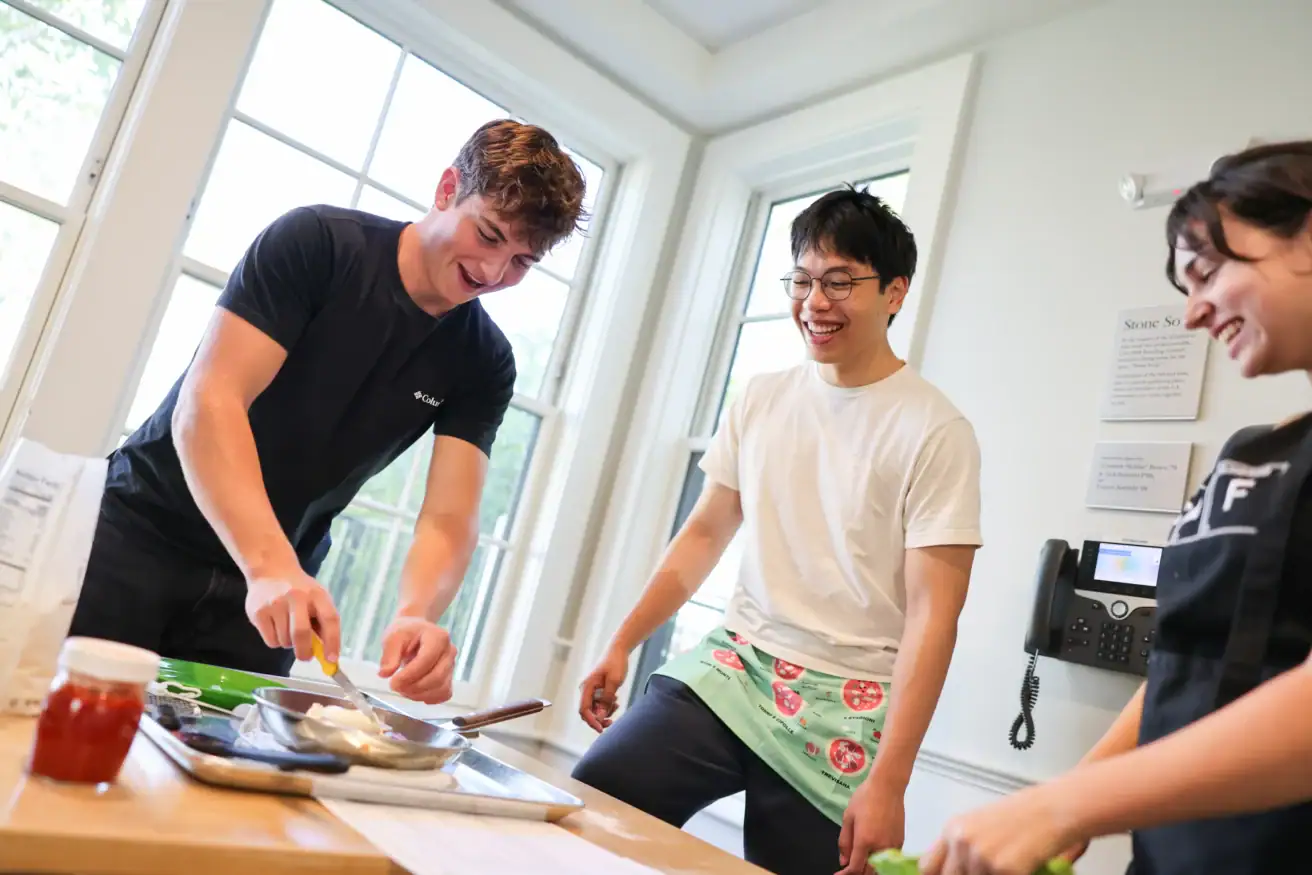
Student collaboration is key to the course. In Bailey Commons, the common room between Haines and Hobson Houses, students gather to put culinary concepts into practice in two fully equipped kitchens. Each week, students typically complete two laboratories: one in Bailey Commons focused on cooking and another in the CA Labs building, where experiments reveal the scientific properties of ingredients.
Working in teams, students collect data and investigate how chemistry shapes the final dish. Cooking labs often conclude with students tasting their creations and sharing the results of their work, bringing residential and academic life together around the table.
The course culminates in a potluck that serves as the students’ final major assignment. Each student chooses a recipe, often a family staple or a dish they have always wanted to try, and analyzes its chemistry. Students examine the scientific processes involved with each meal before sharing a buffet with classmates.
Past sweet and savory delights have ranged from chocolate mousse and salted caramel ice cream to chicken tikka masala and Ethiopian flatbread. Students are assessed on their scientific evaluation.
Former Chemistry of Cooking student Jonathan Aish ’27 chose to create crème brûlée, challenging himself to explore a culinary concept not covered in class. The dessert required him to learn about custard formation and the precise temperatures and cooking times needed to achieve the right consistency without curdling.
“I really loved that final because it gave me a sense of initiative in what I wanted to make, and encouraged me to explore a whole different side to cooking for myself,” Jonathan says.
That’s precisely what Flink hopes students leave the Chemistry of Cooking course with: a newfound enthusiasm for science and confidence to apply scientific thinking beyond the classroom.
“I often remark that Chemistry of Cooking is the most useful class I have taken at CA, not just for teaching me the science behind cooking, but for teaching me how to cook,” Jonathan says. “The class gave me a newfound appreciation for the food that arrives on my table, and for the people who make it.”