
CA Philosophy Students Discuss Higher Education Reform with Alum Advocate
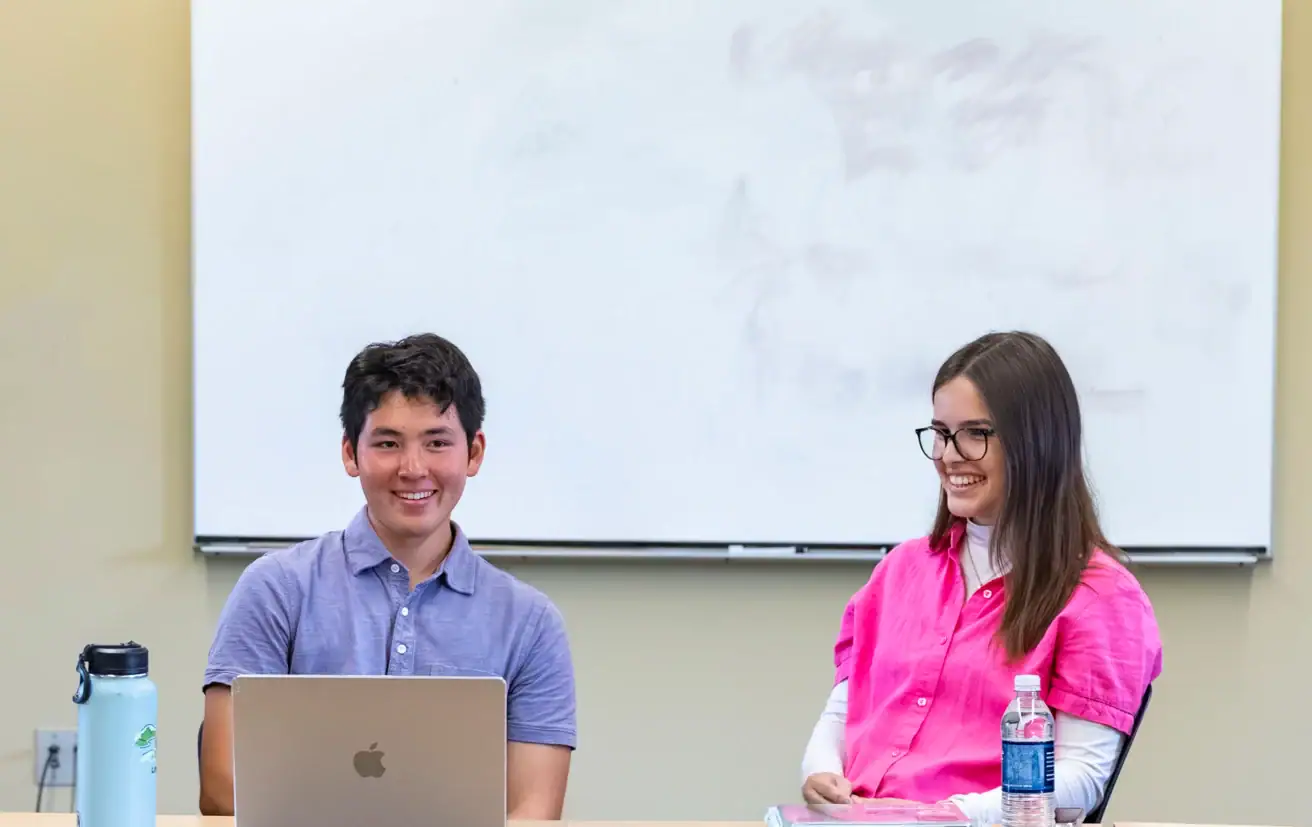
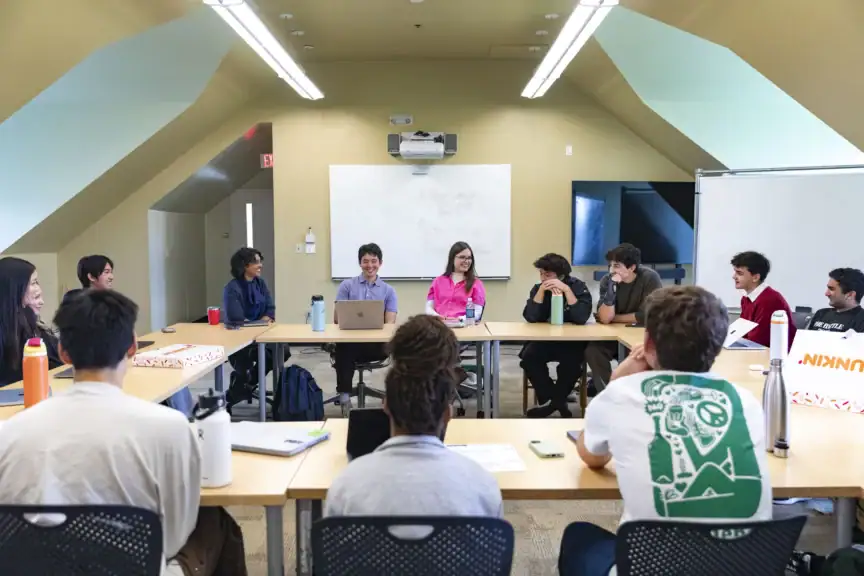
On May 13, Concord Academy alum Jared Rhee ’22 returned to campus with fellow Yale University student Emily Hettinger to speak with students in the History of Philosophy: Justice classes taught by Topi Dasgupta P’22 ’25 about the role of universities in American democracy.
This November, Rhee and Hettinger helped organize Reimagining Elite Higher Education, a three-day conference in New Haven, Conn., that brought together around 300 students, alums, and faculty members from more than 40 colleges and organizations. The event examined how universities could rebuild public trust while addressing inequality. At CA, the discussion connected directly to themes explored in Dasgupta’s class, including governance and political theory. Rhee, a chemistry major, said he felt disillusioned with the culture of corporate recruiting at college. He expressed a desire for more students to prioritize community impact over maximizing the return on their investment in their degrees.
After taking a gap year to organize for the 2024 election in rural Pennsylvania, he began thinking more critically about the relationship between elite universities and civic leadership. While canvassing far from his college campus, he realized how few residents had been contacted or engaged at all.
“It was really interesting to realize that people graduating from a lot of these Ivy League schools have a disproportionate amount of impact on this country, despite their limited interaction with their immediate communities,” he said. For Rhee, leading the conference became a way to push back against that dynamic and help reshape campus culture.
He collaborated with co-chair Hettinger, a senior from California studying psychology and education. As the first student from her public high school to attend Yale, she said perceptions of being an Ivy League student often felt polarized. Through co-leading the conference, she hoped to create space for more balanced discussion.
“It didn’t feel like there was this nuance to be critical of the universities and understand their role and responsibility in building a lot of distrust in higher education while also recognizing the value of these institutions as places of learning,” Hettinger said.
Throughout the conference, participants revised a draft document titled “An Academic Social Contract for Our Time,” proposing reforms such as ending legacy admissions, providing need-blind acceptance, encouraging investment in local communities, and preventing career funneling—where students are encouraged to be oriented towards certain types of careers from their first year of college.
Students in Dasgupta’s classroom raised questions about whether elite education increasingly determines social status in the United States. One student asked what happens to democratic life when educational prestige replaces other forms of status and belonging.
Dasgupta connected the conversation to Marx’s critiques of institutions that reinforce class inequality. Students and speakers debated whether universities today continue to function as engines of social mobility or instead reproduce existing social hierarchies.
The visit challenged students to think beyond higher education as a pathway to individual success and instead consider its broader role in shaping citizenship. Rhee and Hettinger represent a growing movement of student scholars advocating for greater societal accountability within collegiate learning environments.