
Senior Projects Spark Artistic and Scientific Innovation
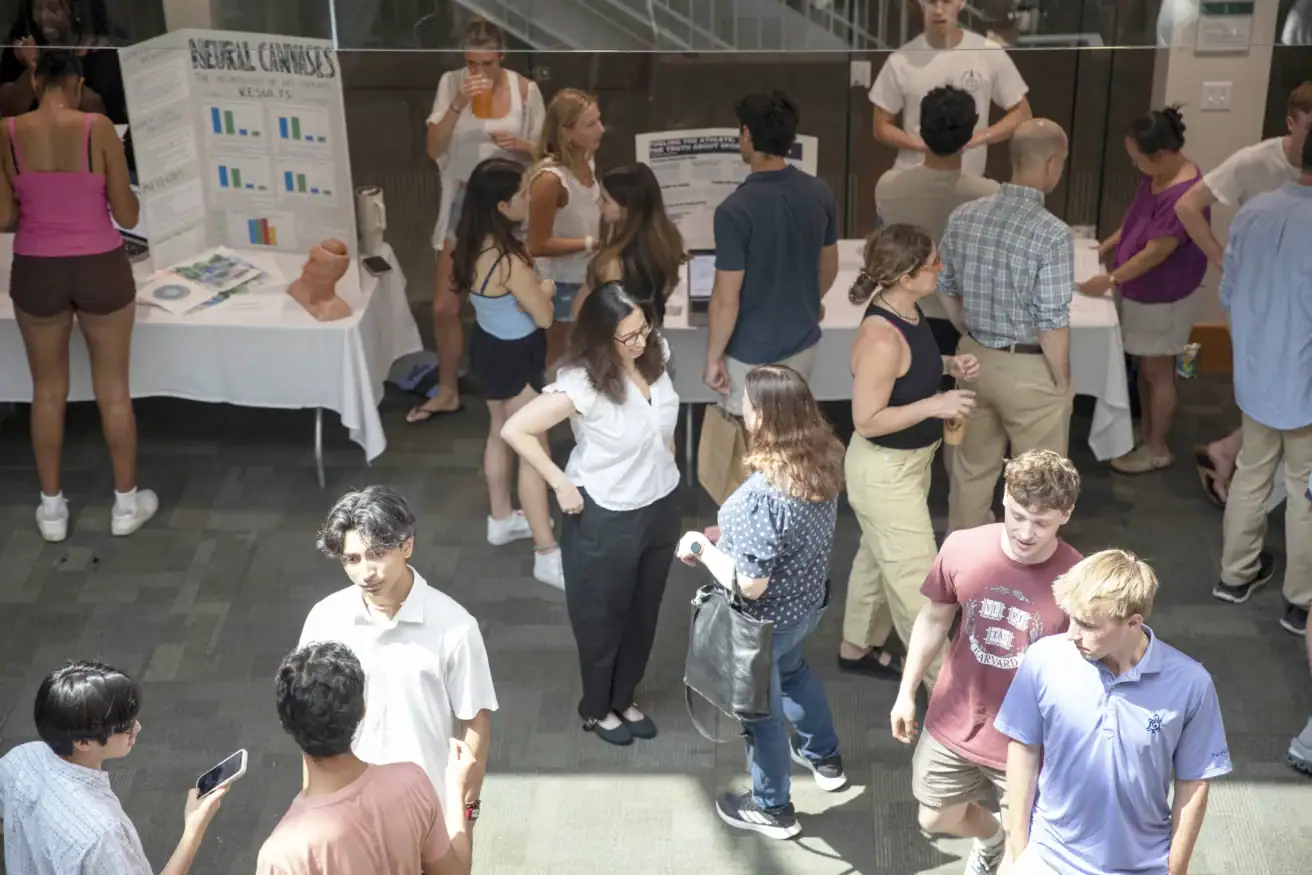
At the May 18 senior project showcase in the SHAC atrium, Concord Academy students presented a wide range of independent research in areas ranging from literary analysis to aviation safety systems.
The annual senior project program allows selected students to spend their final semester pursuing experimental work. Students apply during their junior year and dedicate much of the senior spring to pursuing their academic passions.
Will Tucker, Science Department head and senior project coordinator, said the initiative encourages students to “pursue love of learning in a whole new venture and direction.” This year’s 32 senior projects required technical analysis and artistic exploration, with many projects combining multiple disciplines.
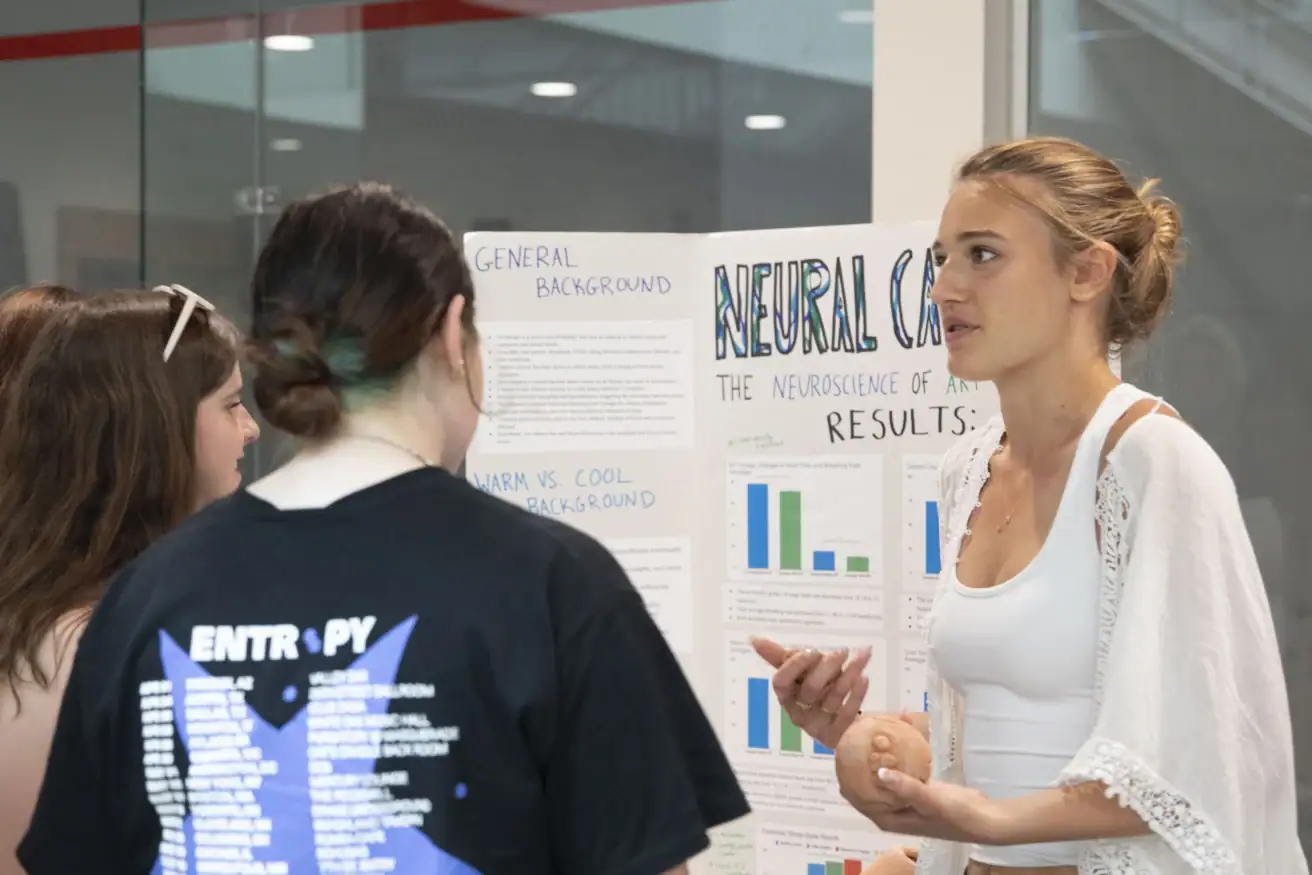
Aleksandra Zdraveski ’26 explored the neuroscience of visual art. Inspired by her longtime interest in painting, drawing, and ceramics, she researched how creative practices can support emotional healing. Aleksandra studied how the brain perceives color and art, and the neurological effects of anxiety, depression, and PTSD.
The project culminated in an independently conducted on-campus case study examining the effects of art therapy on stress levels. Twenty CA student participants were divided into an art therapy group and a control group, with stress measured through heart and breath rates and self-reported anxiety scales over three weeks.
The art therapy group showed statistically significant decreases across all three measures, supporting Aleksandra’s hypothesis that creative activities can reduce stress responses. She also created an interactive ceramic sculpture of a human head containing removable brain structures, allowing viewers to engage directly with the concepts behind the research.
William Frabizio ’26 developed and taught a course to CA peers about robotics and autonomous systems, designed to introduce students to engineering through hands-on lessons. Driven by his own experience learning robotics independently through clubs, internships, and personal projects, William wanted to create a classroom environment where students could build technical skills.
The course began with lessons on robotic quadrupeds using the Unitree Go2 Pro AI robot dog.
Students learned about LiDAR mapping, obstacle avoidance, mobility systems, and the use of robotics as a social outreach tool.
The class later expanded to aerodynamics and remote control aircraft engineering. Students designed and tested paper airplanes using the principles of lift, drag, thrust, and gravity before progressing to using flight simulators and constructing a laser-cut foam remote-controlled airplane. Through the process, William gained experience in curriculum design and classroom instruction.
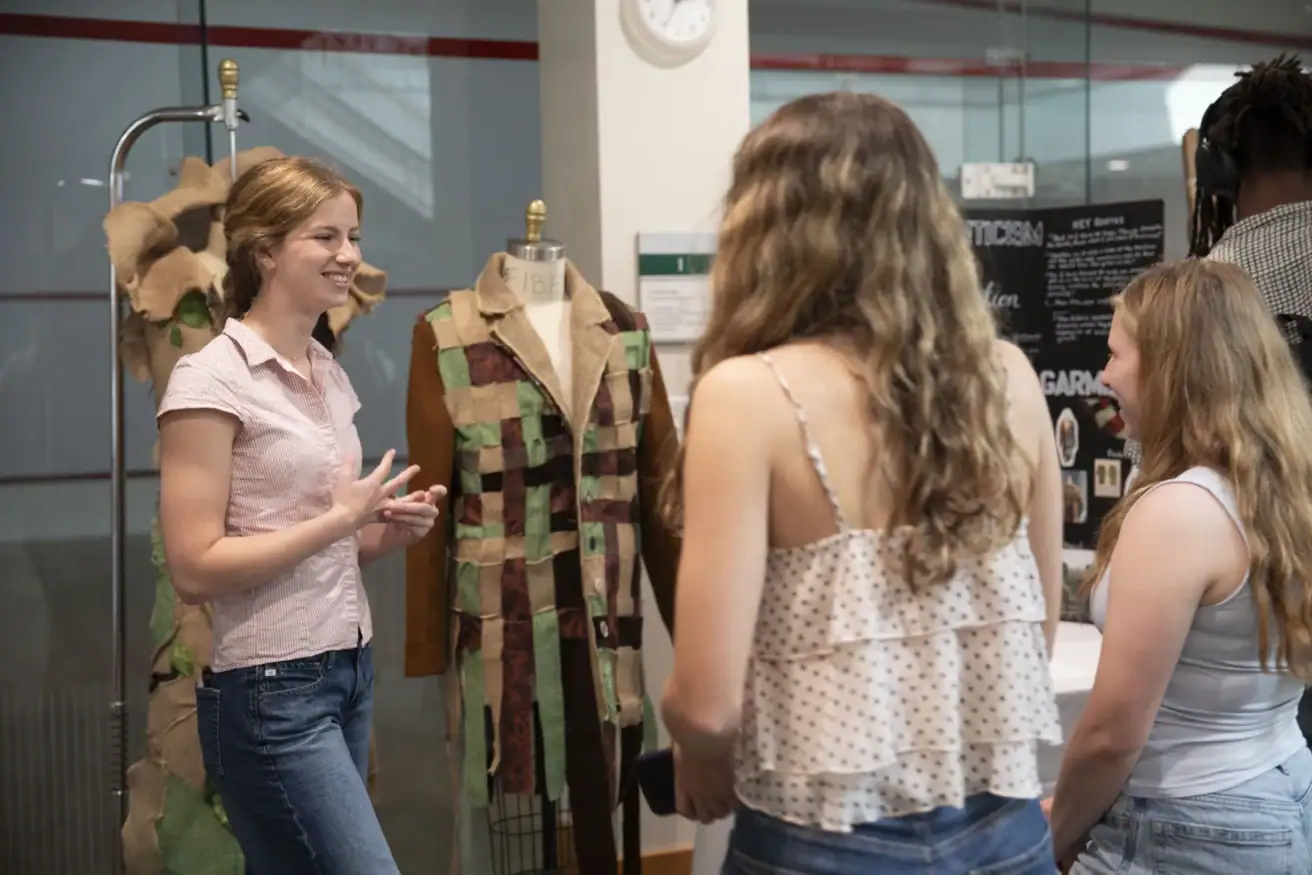
Eliya Ganot ’26 used fashion as a form of literary interpretation to deepen her understanding of William Wordsworth’s poem “Lines Written a Few Miles above Tintern Abbey.” Inspired by a CA course on British Romanticism, she expanded her exploration through independent research into the literary movement, which emphasized emotion, individualism, and reverence for nature.
Written during the Industrial Revolution, Wordsworth’s poem reflects on his personal development over five years, presenting the Wye Valley, between England and Wales, as a site of reflection and respite from urban life. Reflecting on the poem’s themes, Eliya created two garments representing Wordsworth’s youth and adulthood. She constructed the pieces by weaving together burlap and fabric to represent the narrator’s integration of past and present selves.
One garment features the quote “Flying from something that he dreads,” while the other includes the phrase “Who sought the thing he loved,” emphasizing the author’s transformation over time.
Rodolfo Wang ’26 researched how commercial aviation systems could be adapted for smaller aircraft such as drones. He designed a custom flight computer around an ESP32 microcontroller. Rodolfo integrated motion sensors, wireless communications systems, and advanced motor controls into the computer to create a more reliable system.
Rodolfo initially aimed to implement collision avoidance and stall protection. After encountering technical setbacks, including hardware incompatibility, he shifted his focus toward making the system more fault-tolerant—ensuring the aircraft could continue operating even if one component failed.
Inspired by the backup systems used in commercial airplanes, his final design employed three separate microcontrollers and sensor groups operating simultaneously. Each system verified the others’ data, allowing the remaining two to override incorrect readings if one failed, helping maintain flight stability.
Reflecting on the iterative problem-solving that shaped his project, he offered this advice to students looking ahead to crafting their final semester of self-directed study at CA. “Don’t be afraid to fail,” he said. “Senior projects are really based on how much work you put in and what you learn, versus whether you accomplish the goals you originally set out to.”