
Utopias Expo Brings 19th-Century Communities to Life
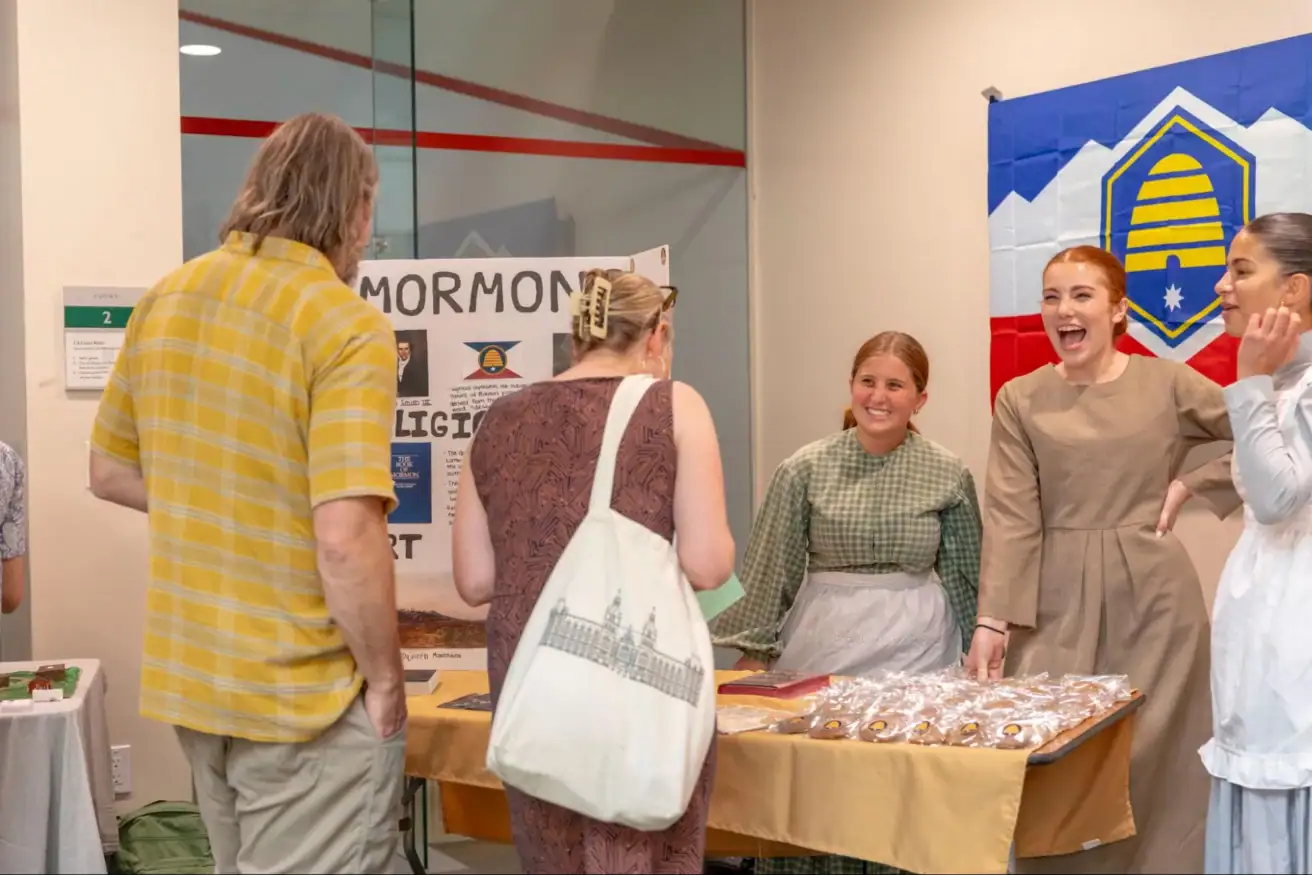
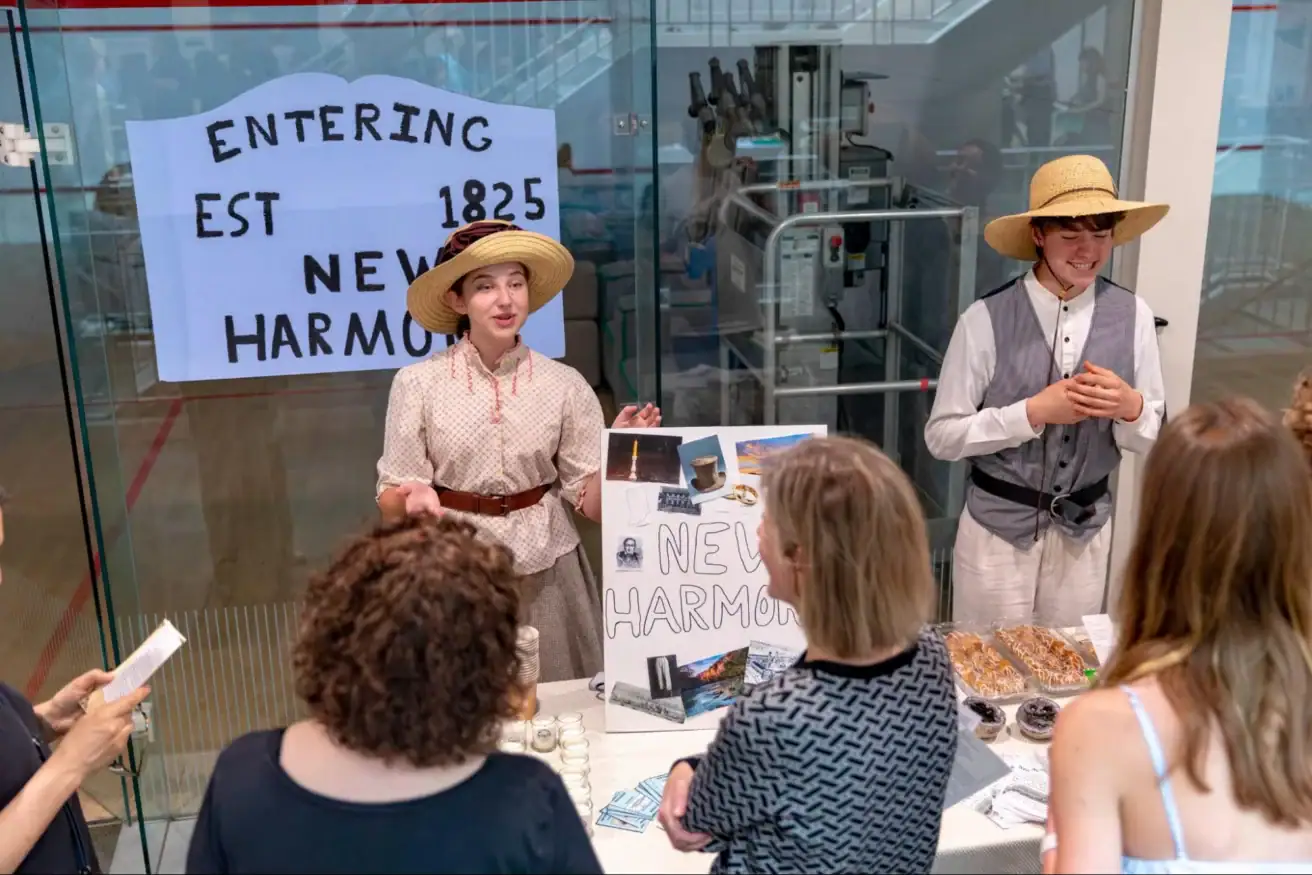
On May 20, students in history teacher Kim Frederick’s U.S.: Utopias course hosted a lively Utopias Expo. The students portrayed members of various 19th-century utopias—intentional communities established in opposition to the perceived corruptions of industrialization, aiming to create idealized alternatives to mainstream society—in period costume.
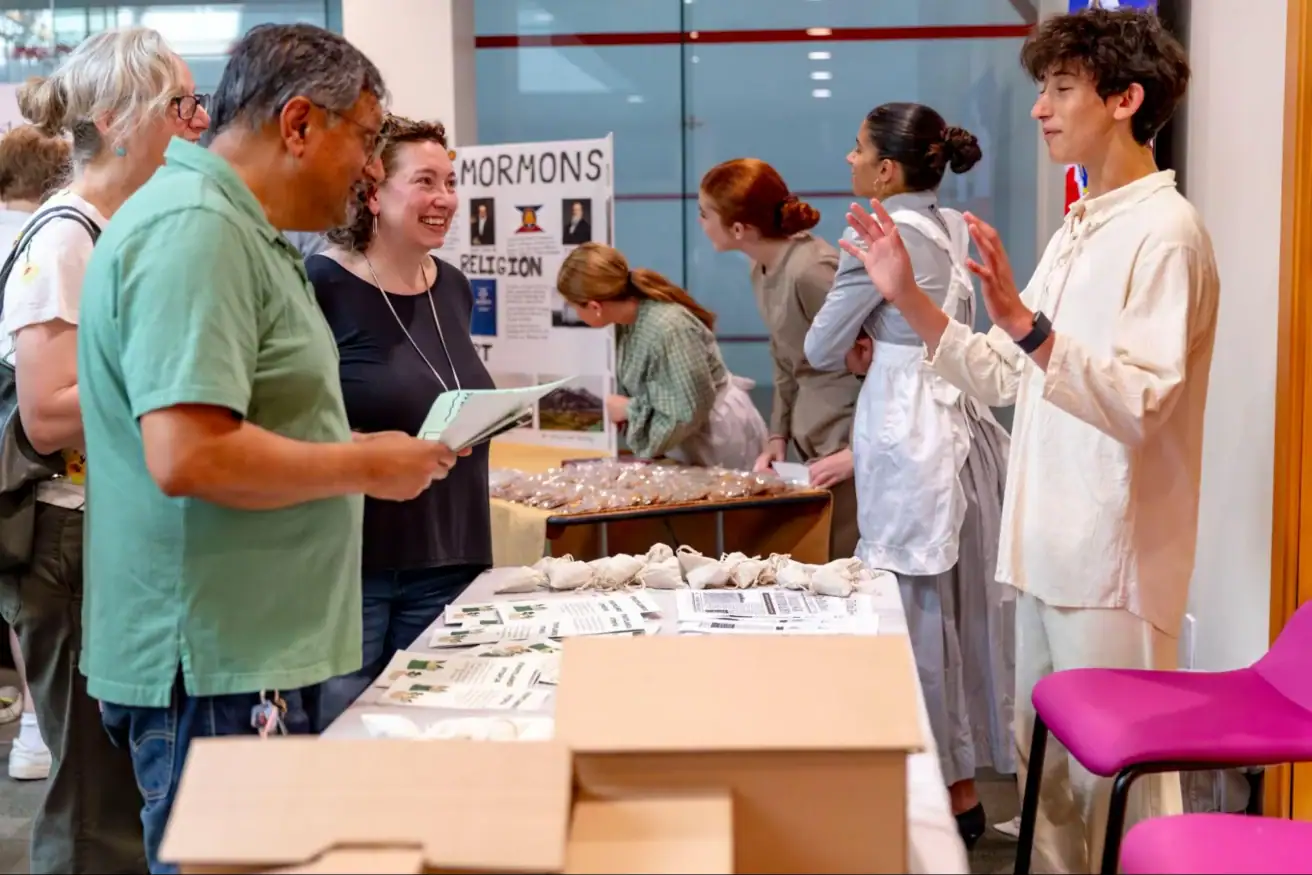
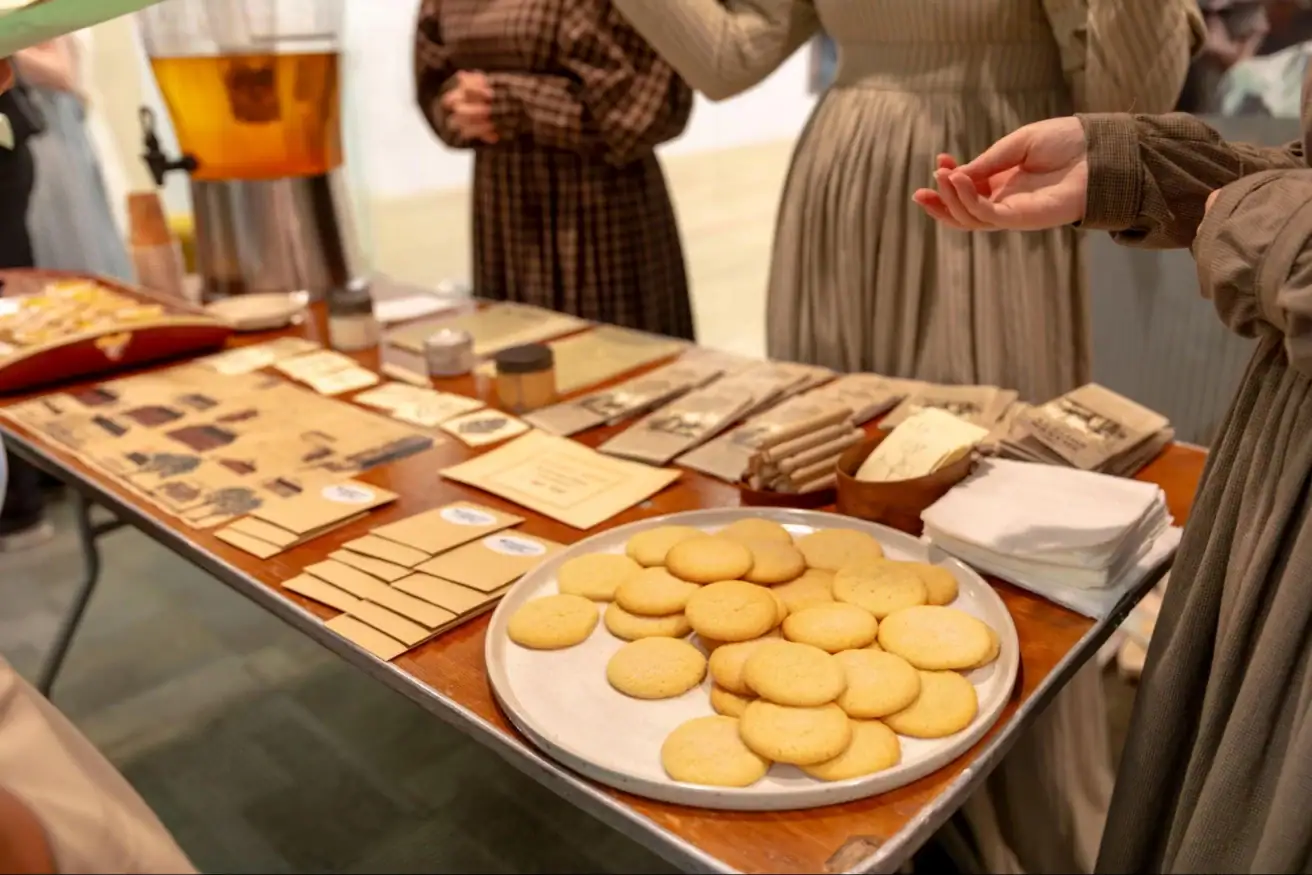
Featured utopias included Zoar, the Shakers, Oneida, Fruitlands, Modern Times, New Harmony, Brook Farm, and early Mormonism. Expo booths distributed themed giveaways, served food that their community members would have eaten, and engaged guests in conversations about each group’s philosophy to recruit new members. Posters around campus declared that “humanity is perfectable” and invited visitors to “come find your slice of paradise.”
Guests selected from a variety of 19th-century personas at the entrance and remained in character as they explored the expo. These personas represented people from different social and economic backgrounds, including skilled and unskilled laborers, men and women, and both free and enslaved people. Students then attempted to recruit them to their utopian communities.
Frederick said she developed the project to give students a more hands-on understanding of the historical movements they were studying: “I wanted students to dig into the reasons that people would have been motivated to step away from regular society to try these experimental communities.”
The eight interactive exhibits at the expo made the event engaging and participatory. For example, at the Shaker table, students dressed in simple linen gowns and white caps and promoted communal living, pacifism, and gender and racial equity. They distributed clothespins and Shaker lemon pie created from whole lemons, inspired by the community’s innovations and “waste not” philosophy.
Frederick first launched the Utopias Expo project in 2019, and this year marked the third installment. She says each iteration has become more spirited, with students investing more effort into costumes, props, and presentations.
The course begins with an exploration of the American Revolution and asks students to revisit the founding documents: the Declaration of Independence, the Constitution of 1787, and the Federalist Papers. Students are pushed to consider the motives and intentions of the framers and then asked to look at the society of the early Republic and how the Revolution changed government, the economy, and society. By turning to the question of why Americans in the 1830s and 1840s joined utopian communities, students can bring another critical lens to the question of what the Revolution accomplished.
The course asks students to analyze how these antebellum communities challenged mainstream society and how the American republican experiment both supported and limited their goals. While students practice analytical writing and are taught how to marshal evidence, construct arguments, and write persuasively, Frederick says the expo often leaves the strongest impression on members of her class.
“The thing that they will remember is the expo, because they were the authors of themselves as their historical characters and brought their understanding to how people thought about important things in the past—governance, the economy, social relationships. The past is a foreign country, and the expo is a way to try to visit it for an afternoon.”