
CA History Class Brings Gandhi’s Legacy to the Global Stage
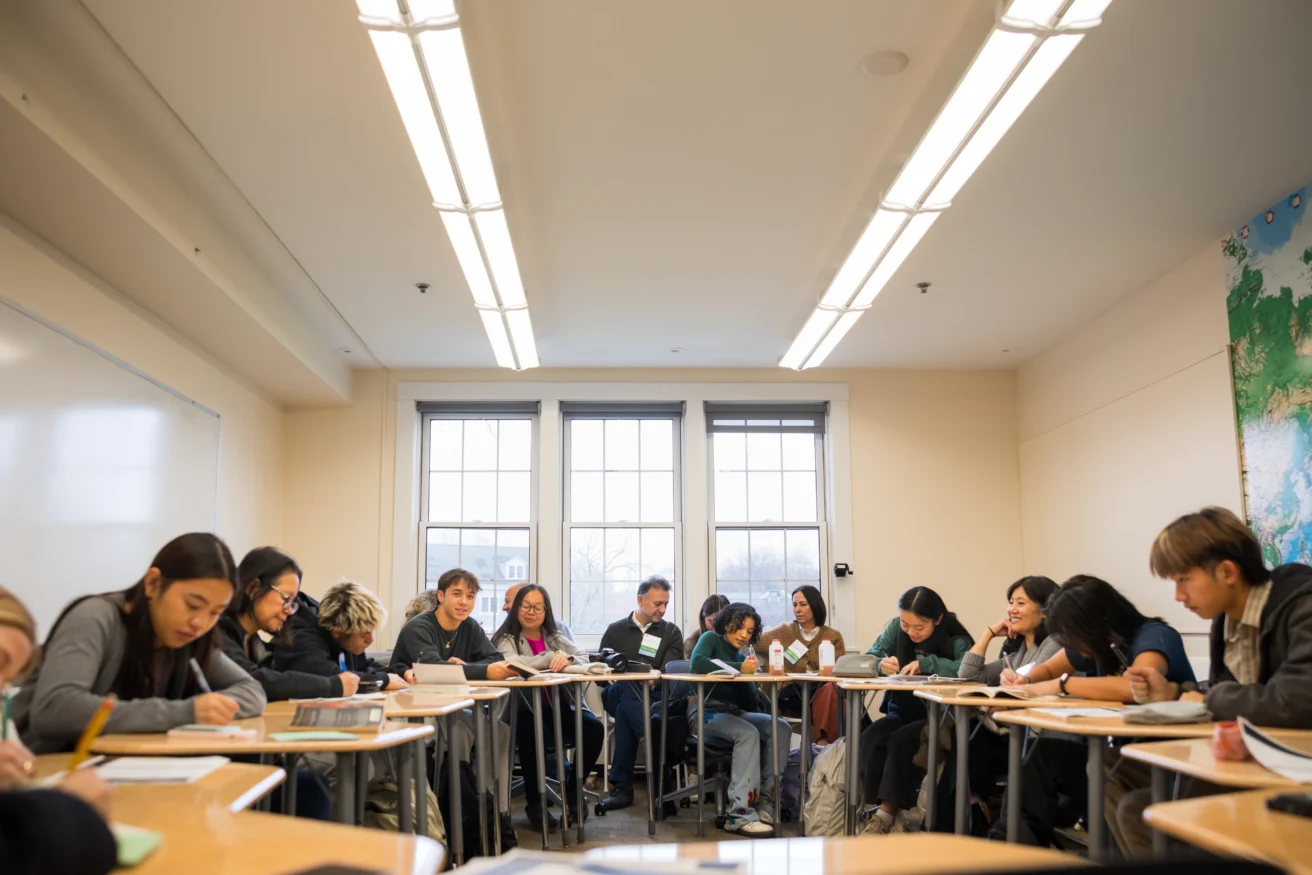
On November 3, Concord Academy’s The Making of Modern India class, created and led by history teacher Topi Dasgupta P’22 ’25, participated in the United Nations’ Second World Summit for Social Development. They joined a global audience for the premiere screening of the documentary film Ahimsa – Gandhi: The Power of the Powerless, and offered feedback that was included in the UN’s official report.
The summit, held in Doha, Qatar, and attended virtually by CA students, marked the 30th anniversary of the landmark 1995 Copenhagen gathering. World leaders and educational institutions addressed urgent challenges, including inequality, technological change, and social inclusion.
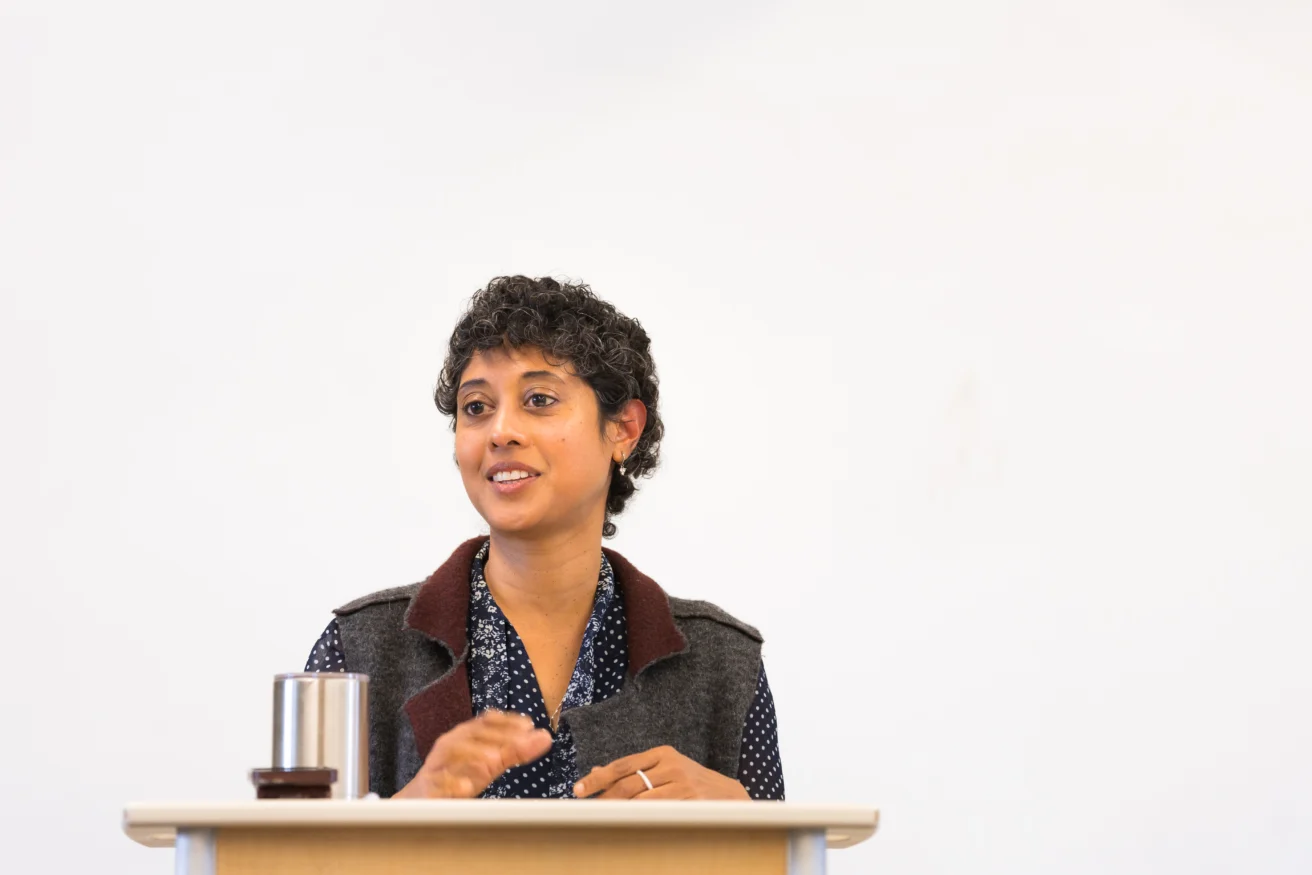
For Dasgupta, the connection between the summit’s aims and the course’s focus made participation a seamless extension of classroom learning. “Much of what we examine in my course is how the British East India Company and later the British Raj exploited India,” she says. “All of the objectives for social progress in the UN’s World Summit coincide with the objectives that Indians had for their own political freedom and societal development in the colonial era. So, it was a natural fit.”
The documentary screening deepened the class’s study of Mahatma Gandhi and the Indian independence movement. The film explores the impact of Gandhi’s advocacy and how his legacy of nonviolence inspired leaders such as Martin Luther King Jr. and Nelson Mandela, as well as peace movements worldwide. “The theme of the film is how to mobilize and resist unjust political power,” Dasgupta says. “The global impact of his strategy of nonviolent protest and its continuing relevance allow students to relate the history we are studying to urgent issues in today’s larger political and economic landscape.”
Student Parker Daniel ’26 said the course has pushed him to think about India’s history as an ongoing moral and political conversation. “My favorite part of the course has been exploring how political history connects with deeper questions of identity and morality,” Parker says. “I really enjoy how Topi encourages us to engage with primary sources and intellectual traditions rather than just memorizing dates and facts.”
For Parker, the film’s portrayal of nonviolence left a powerful impression. “The documentary helped me understand nonviolence not just as a strategy but as a moral discipline,” he says. “This film left a lasting impression on me, one that will force me to consider the ethical responsibilities of modern politics and how ahimsa continues to shape movements today,” referring to the ethical principle of non-harming.
After the screening, students submitted feedback on how the film resonated with them. Organizers of the summit’s virtual session praised the CA students for their contribution. In a letter to Dasgupta, Gandhi Worldwide Education Institute President Lynnea M. Bylund wrote, “It was wonderful to have Concord Academy represented at this global event, where the film’s message of truth, courage, and compassion reached students and educators across many countries.” She noted that CA students offered heartfelt and perceptive responses and granted permission for their reflections to be included in the UN’s final documentation.
“As the world looks toward redefining strategies for social progress,” Bylud wrote, “the students’ thoughtful engagement shows that Gandhi’s message remains profoundly relevant.”