
Environmental Science Class Connects with Concord Watershed Protectors
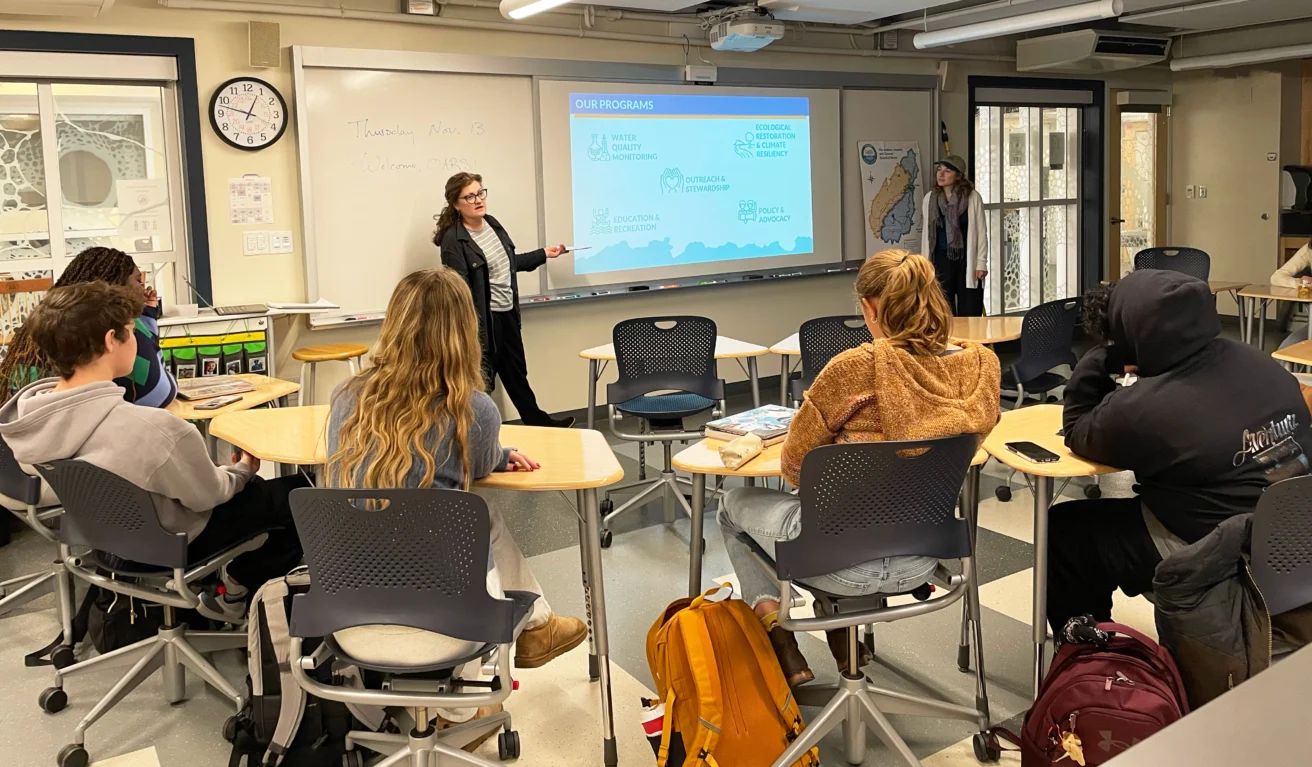
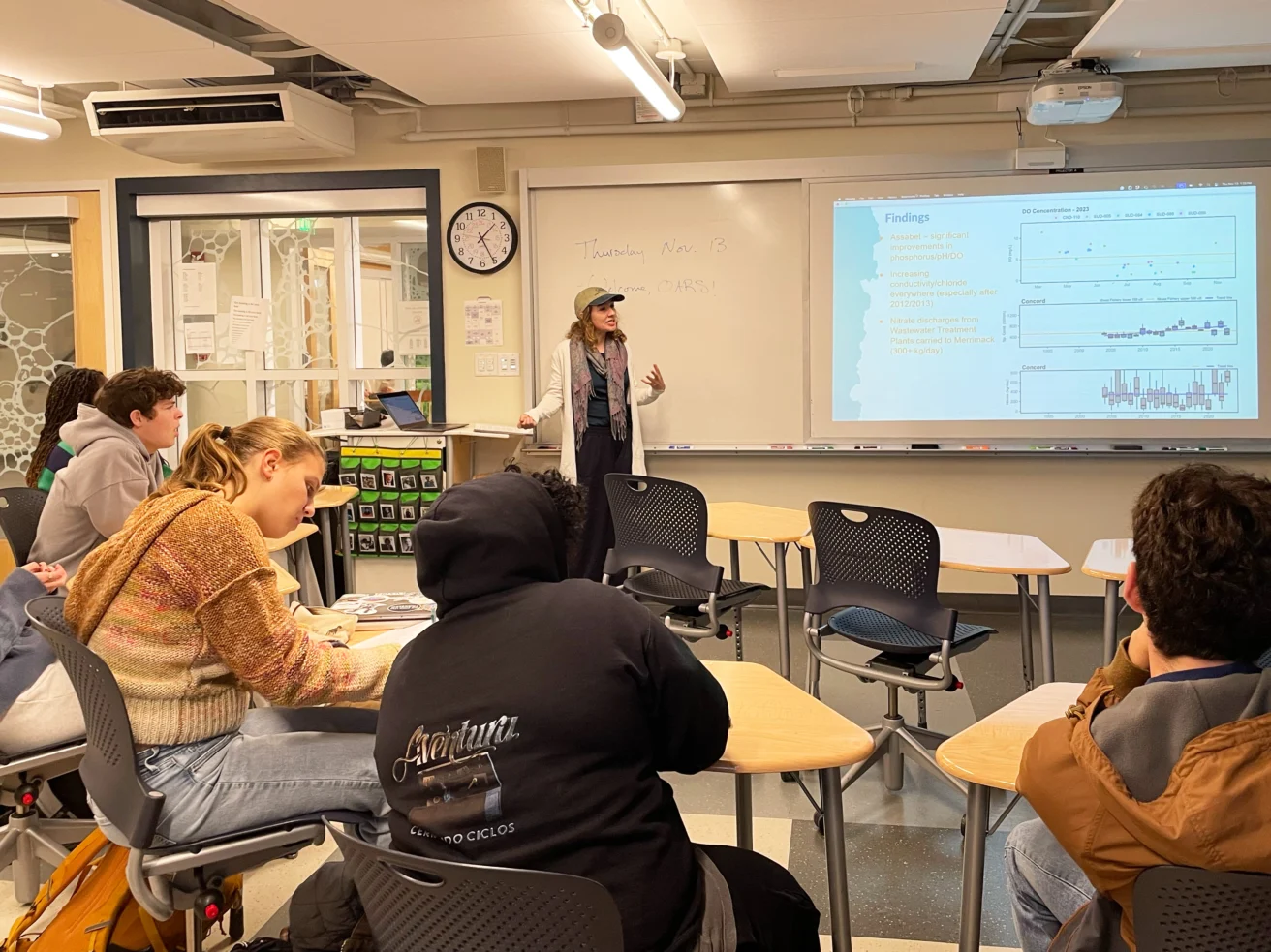
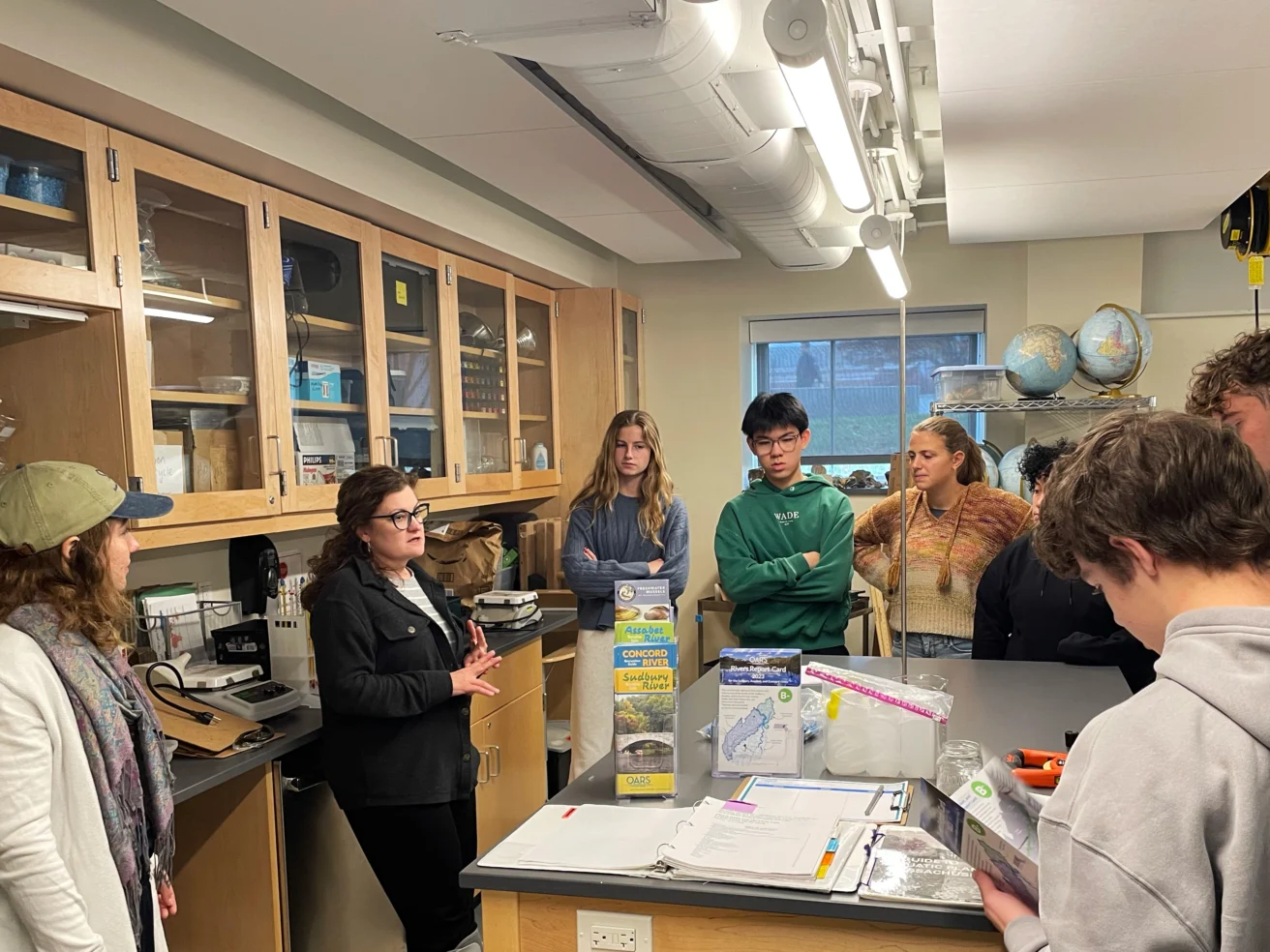
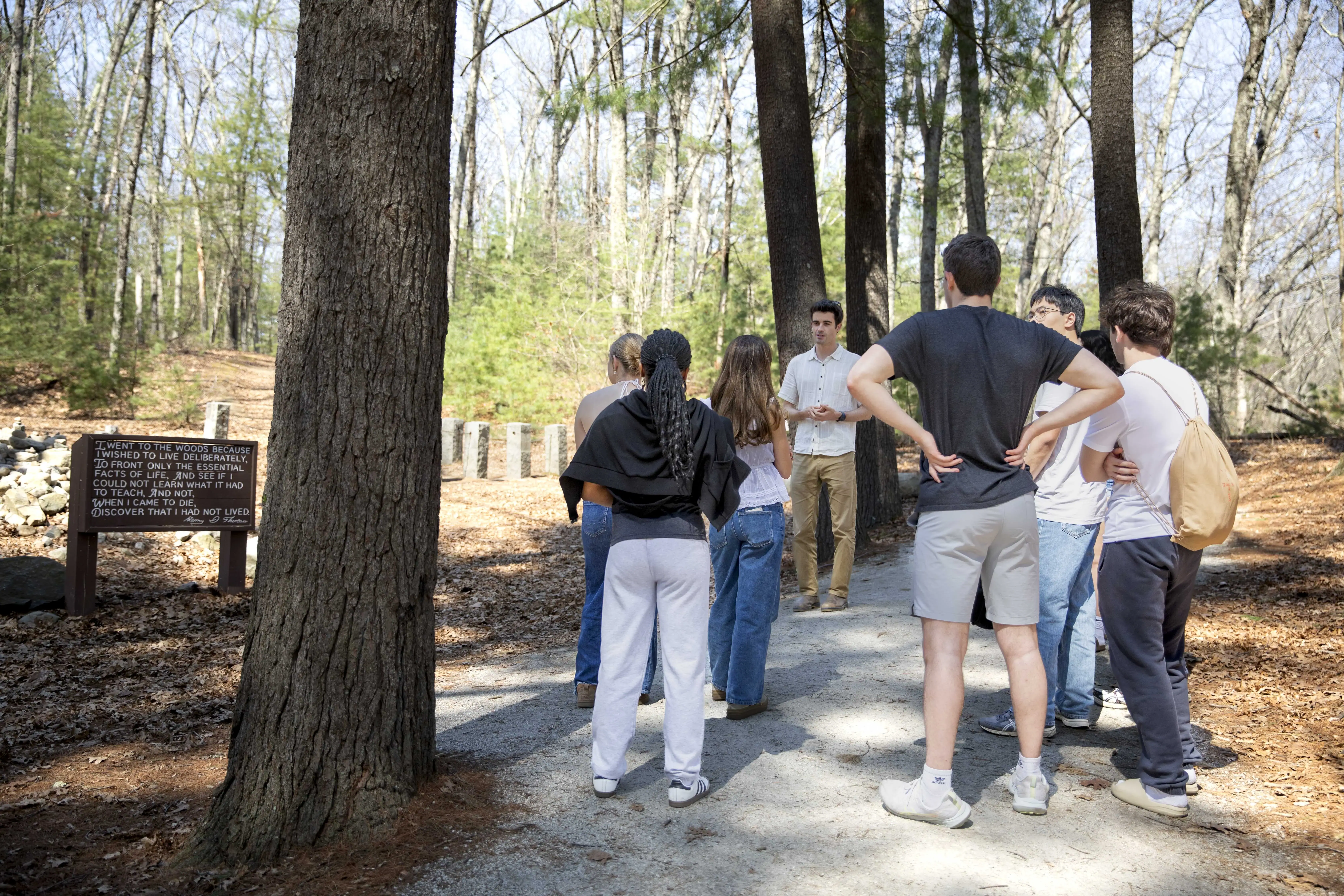
On November 13, two staff members from OARS, a local nonprofit watershed organization, visited both sections of science teacher and environmental sustainability lead Chris Labosier’s Water Resources course at Concord Academy. In this upper-level environmental science elective, students have been exploring waterways through ecological, historical, social, political, and economic lenses. They’ve learned about the physical processes that shape streamflow and landscape formation, the chemical and biological factors that influence water quality, and the influence of climate change on the hydrologic cycle and ecosystems. Getting to talk with professionals who steward the Sudbury, Assabet, and Concord rivers and their tributaries helped Labosier’s classes understand the interconnectedness of human development and watershed health in practical terms—right here in CA’s backyard.
“Not every watershed has an organization,” said Heather Conkerton, OARS’s ecological restoration manager. “We’re lucky to have one here.” OARS started, she explained, as a clean-up effort in 1986 for the Assabet River, which was then so highly polluted it was known as “the cesspool of Massachusetts.” In 2011, OARS expanded its mission to protect all the rivers within the local watershed, adding the Subury and Concord rivers, for the benefit of both people and wildlife. According to the organization’s “Rivers Report Card,” which it produces every five years, all three rivers have made tremendous progress across multiple water quality parameters. Nearly 30 miles of river within the watershed have federal designation of “wild and scenic”—able to be explored and enjoyed today for much of the same unspoiled beauty Henry David Thoreau and Nathaniel Hawthorne once celebrated.
Conkerton’s work focuses on ecosystem restoration and climate resilience. She monitors invasive aquatic species, runs plant identification workshops, and conducts other educational outreach. She also assesses the human-made structures that allow and prohibit water flow and supervises their replacement or removal.
Culverts, the channels that run beneath roadways, raise flood risks when they’re undersized and can cause sinkholes when they’re in disrepair; they can also impede the passage of fish. But their repair is expensive, costing communities on average more than $1 million per culvert. Many don’t have the funds to maintain them.
Dams can also pose a catastrophic risk to humans when they fail, which is why OARS maintains a guide prioritizing dam maintenance based on hazard assessment. Conkerton said only 3% of the 162 dams mapped in the Concord watershed have a function; most simply impede the flow of tributaries. The class had been examining case studies from around the United States, including dam removal in the Pacific Northwest, and wrestling with the interdisciplinary challenges of understanding their impact. In contrast to those large public works, many dams in eastern Massachusetts are small and on private property. She stumbles across uncharted ones often.
Conkerton helped the students visualize the way animals navigate the watershed as well. “We don’t just work on the rivers, we also work on these smaller streams, because they actually provide an incredible amount of habitat for rearing and spawning,” she said. “We need these smaller streams. So in my line of work, that’s why we want the dams to come down; that’s why we want to make sure these culverts are the right size so they can get through.”
Water conditions matter too, as Conkerton’s colleague Abby McCarthy, OARS’s water quality program manager, emphasized in her presentation, drawing on the organization’s three decades of monitoring and reporting. “We want the water clean, cold, and connected,” she said. In shallow rivers such as these, water height can fluctuate greatly, and of particular concern have been levels of phosphorus and dissolved oxygen, which put sensitive fish such as cold brook trout at risk of being extirpated, or dying out within their native environment.
McCarthy oversees a team of 32 volunteers who collect data monthly during the summer season at more than 30 sites across the three rivers. Their measurements of factors including water flow, temperature, conductivity, chemical composition, and eutrophication (excessive plant growth) help McCarthy monitor pollution and the impact of human activities and facilities, such as wastewater treatment plants. Some have been volunteering regularly since OARS’s founding. “They’re so enthusiastic,” McCarthy said. “They remind me of why I do this.”
OARS also organizes events such as water chestnut pulls and river cleanups to remove trash. For a small nonprofit with only six employees and two interns, its effect on the Concord watershed has been outsized, largely thanks to sustained community investment. While OARS requires volunteers to be 18 or older, McCarthy suggested that underage teens might consider supporting the organization’s educational mission by mentoring elementary school students through its Water Wise workshops, which empower kids to understand their role in protecting local rivers. “You can’t care about something if you don’t know about it,” she said.
Labossier says the visit was a great opportunity for students, who have explored dams and water quality issues in other geographic locales, to see and hear these topics made local from professionals working in the field: “I think this helps bring the course home, and now they see the watersheds in their home communities in a different way.”