
What is Yours to Do? 2026 Joan Shaw Herman Award Honoree Helen Chase Trainor ’67 Acts From a Spirit of Ubuntu
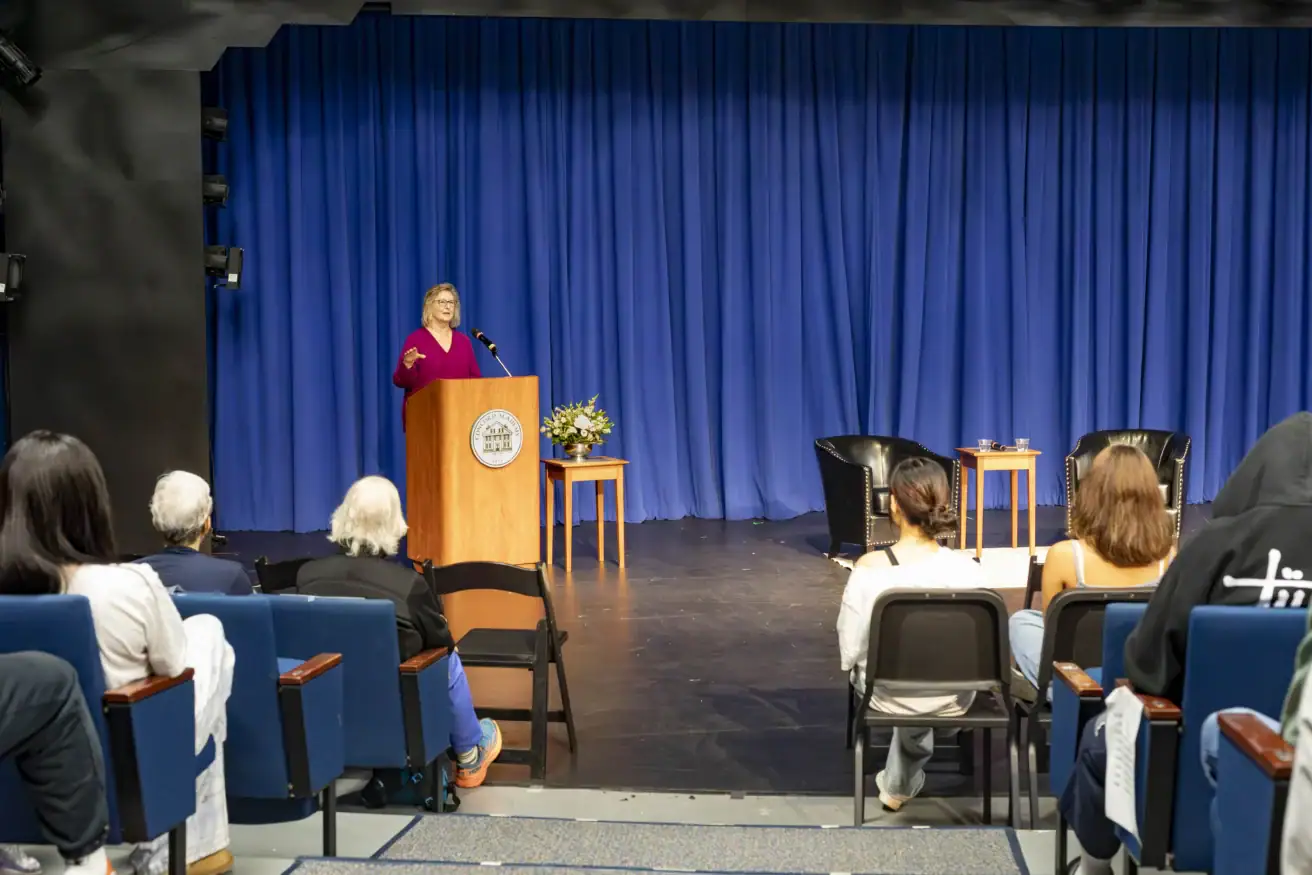
When Helen Chase Trainor ’67 began speaking at Concord Academy on April 17, she wasted no time in addressing the anxieties of the youngest members of Generation Z.
“Are you feeling hopeless about the state of the world?” she asked CA students. “And about your ability to do anything about it? Are you overwhelmed by how much needs to be done in order to make the American dream a reality for more people?”
Trainor paused after each question. As she did, a chorus of yeses swelled from the audience, each time a little louder.
She nodded. “Then I have a job for you,” she said.
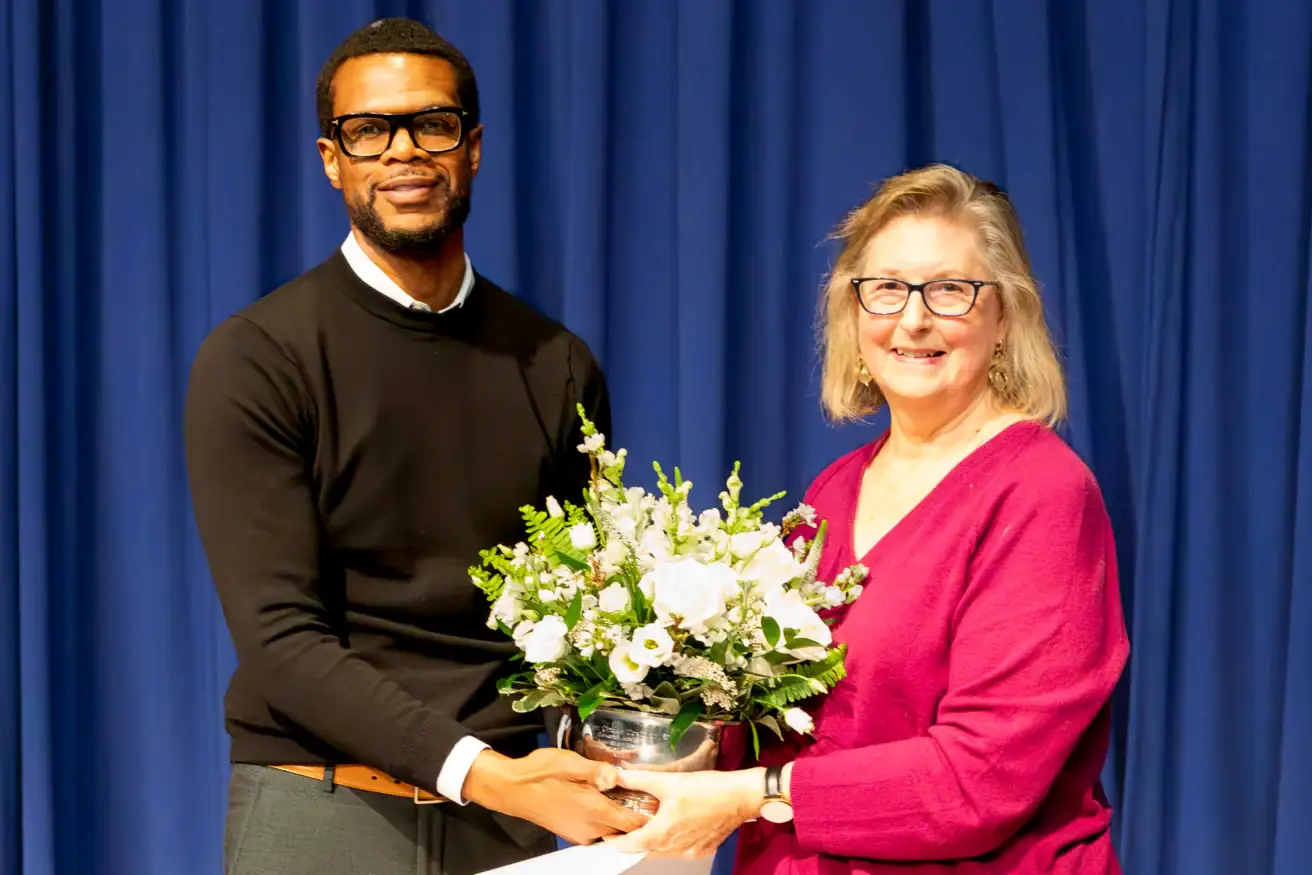
Trainor was visiting to receive the school’s only prize, the Joan Shaw Herman Award for Distinguished Service. CA presents the award annually to an alum in recognition of a lifetime of service to others.
Introducing the award, Tara Djordjevic ’26, a student representative on the nomination committee, discussed its namesake, Joan Shaw Herman ’46, who devoted herself to improving conditions for others with disabilities after she contracted polio as a young woman. Then Betsy Green ’91, who chaired the committee, shared highlights of Trainor’s contributions through public defense, mental health advocacy, and church leadership.
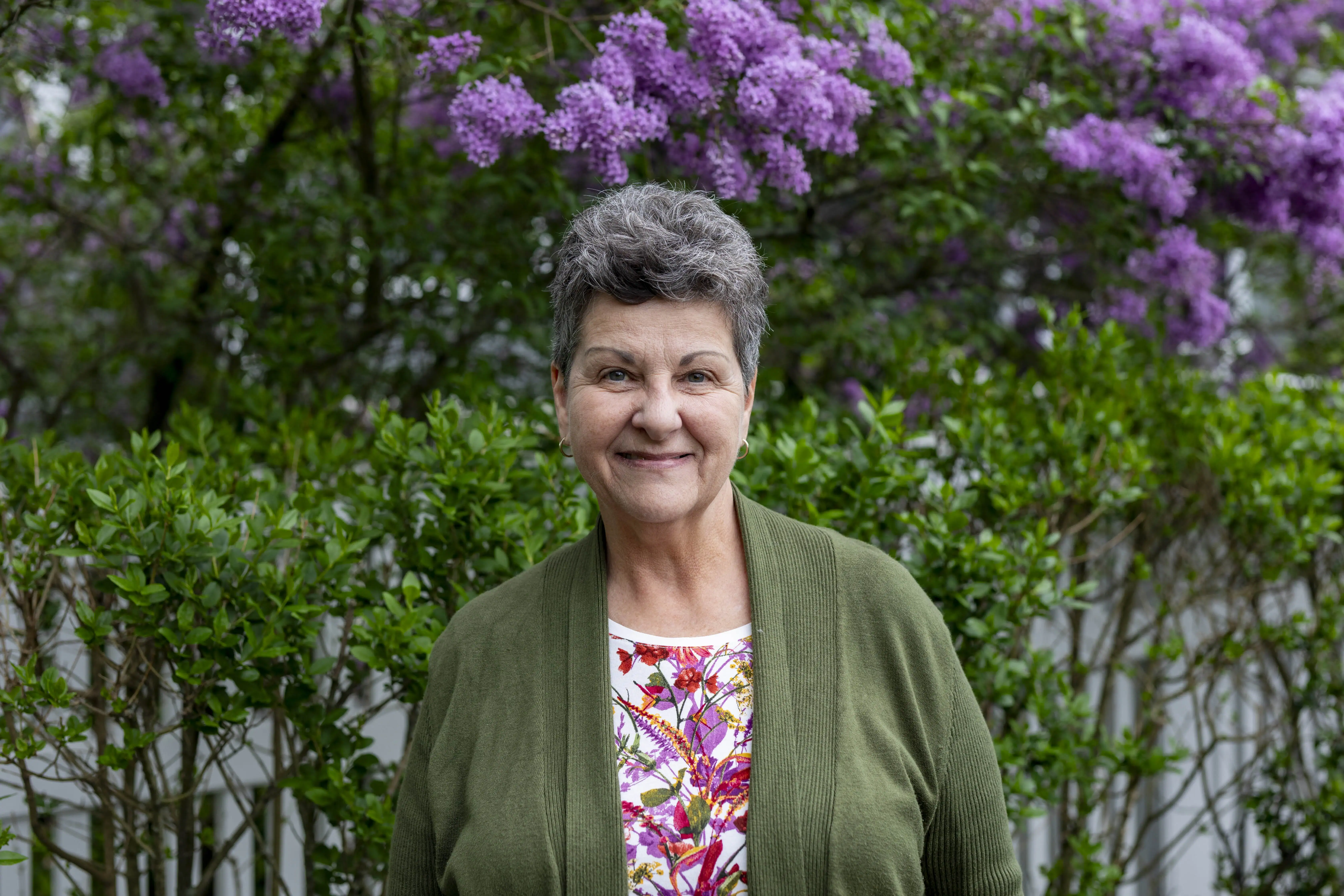
After building a career in the legal profession as an assistant federal public defender, Trainor became a fellow at the United States Supreme Court. She founded the Virginia Institutionalized Persons Project to secure humane health care for incarcerated women and investigate civil rights abuses in mental hospitals. She also created the Florida Mental Health Advocacy Coalition, bringing multiple mental health organizations together to pursue policy changes to improve the lives of people with behavioral health conditions. As an ordained Episcopal deacon, Trainor has bridged spiritual care and social justice, managing a range of programs, including securing kindergarten education guarantees and supporting women transitioning from homelessness. She’s the author of multiple books and articles on appellate practice and prisoner litigation, as well as the 2025 book Why Millennials Don’t Go to Church.
After Head of School Henry D. Fairfax presented Trainor with the award, she discussed her “efforts toward systemic change: not just changes around the edges of things, but changes to the very systems that form our social fabric,” calling for change to “any system that condones the inhumane treatment of human beings or that perpetuates unequal access to basic human needs.”
She asked students, “So how do you go about making a difference in the systems that control so much of our lives, many of which are increasingly failing to achieve the standards of basic morality?”
Trainor proposed that it takes incremental reform to transform systems that perpetuate inequality into systems that support life and dignity for all. “Sometimes you have wonderful people like Martin Luther King Jr., Bryan Stevenson, and others who are very charismatic and come forward and grab the public imagination with a larger issue, but for the rest of us, we take on the smaller issues around the edges, and we keep at it,” she said.
Gradually, “if the smaller issues are just, and if they are humane, they have the power to affect the larger issues.” While reducing one person’s harsh sentence by 20 years might not seem to accomplish much in itself, “it matters enormously” in the context of the U.S. judicial system, which, she said, is “far more punitive than almost any other system in the world.”
Trainor clarified that she still believes in the criminal justice system she was long part of. “It works amazingly well,” she said. “In fact, judges are overwhelmingly impartial and do a good job. Juries know which end is up. People who need counsel get counsel, generally speaking.”
But she’s distressed by growing public distrust of the courts. For her, the legal balance rests on the ability to present a strong defense. “The government has enormous resources, and in order to make the system work properly, you have to have some equal power on the other side,” she said.
For example, in the 11th circuit, the federal appellate jurisdiction encompassing Florida, Georgia, and Alabama, Trainor argued for less draconian sentencing measures, and through several cases, helped make the law more humane. “Working as an appellate lawyer, she said, “is one of the most thrilling things that you can possibly do, because you are actively changing the law every time you stand up to argue a case.”
Creating change incrementally is contributing to systemic change, Trainor said: “Each one of those small changes makes for larger changes over time, and you have to trust that.”
To help students take the first steps toward their own visions, she proposed a foundational orientation: the southern African philosophy of ubuntu. Popularized by Archbishop Desmond Tutu, the term can be roughly translated as, “I am because we are.” Trainor contrasted this recognition that our individual humanity is inextricably entwined with the humanity of others with the “winner-take-all culture” of the West, an ideological descendent of René Descartes’ dualistic formulation, “I think, therefore I am.”
With ubuntu as a guiding principle instead, we can all become agents of systemic change, Trainor suggested. She shared an acrostic, DARE, that she’d devised for this occasion to help make her advice memorable: “Dream your passion. Address what is yours to do. Respect the stories. Embrace your power.”
Trainor admitted that the first step may well be the most difficult. “It’s hard to dream when the problems that we face seem resistant to change, generation after generation,” she says. “But I say, make your dream as big as the problem.”
No effort to make a system more just can be sustained without a vision for how life could be otherwise, she explained. “For me, the dreams were a correctional system that did not further punish people by withholding medical care, and a medical system that did not discriminate against the mentally ill,” she said.
Addressing what is yours to do requires identifying steps you can take personally or with others. “Perhaps I could not compel a change of policy about the appropriate scope of medical care in prisons generally, but I could break the big problem into smaller pieces,” she said. For her, that meant requiring facilities to provide batteries for hearing aids and ensure that women receive regular mammograms. Because they are humane and just, such small causes, she said, “have power within themselves and are capable of changing a system from the ground up.”
Her next recommendation, respecting stories, involves listening to voices others don’t want to hear. Trainor started her project in Virginia with no staff and no funding, just a stack of letters from incarcerated people describing the mistreatment they had endured in prison. “Together, they added up to a pattern, which turned out to give us an opportunity to create a lawsuit,” she said.
Finally, she advised embracing the power we each have by becoming experts in our particular passions, then teaching others to become experts of their own stories. “This is called organizing,” she said. “But what it really means is helping people tell their own personal stories to the right people at the right time.”
She recalled a Florida mother’s testimony at a committee hearing about her daughter’s difficulties navigating the mental health system. As she spoke about what it was like to be the parent of a child dealing with mental illness, Trainor recounted, the room went silent. Then, one by one, committee members began recounting stories of their own relatives. The legislation Trainor sought that day was passed, but what happened in that room, she said, was just as important.
“Ubuntu means that we cannot do other than to see ourselves in each other’s stories, and ubuntu is calling us in the name of our common humanity to dare to confront systems that would treat us as anything less than human,” she said.
After her formal remarks, Trainor then took a seat next to Fairfax on the P.A.C. stage to answer questions from him and students, in turn. Several took shape around what it takes to overcome the inertia that keeps us from pursuing systemic change. Sharing CA’s community life theme, “Building the We,” Fairfax asked Trainor how, in her experience, people move from issues that most directly affect them to taking action for the collective good.
“I think it has to do with shared suffering,” Trainor replied. “Oddly enough, suffering brings tremendous power if it’s shared … it becomes something positive, which is quite a miracle, if you think about it.”
She added, “Faith is always about addressing the problem of human suffering, and what draws people together and motivates people to work together is a sense that suffering is held in common.” The motivation to organize has this same underpinning, she said—ubuntu.
When a student asked how she kept herself from feeling numb from the scale of what so many people are struggling with today, Trainor acknowledged this physiological state as a signal: “Numbness comes from not being in touch with your own feelings. So if you feel yourself becoming numb, it means that, as we say in the ministerial profession, you’re suffering from compassion fatigue, and you need to pull back into yourself and give yourself whatever resources you need to be able to bring your passion back. It’s a process that occurs again and again throughout your life if you do lead a life in which you’re speaking for others.”
Asked about specific reforms, Trainor said her foremost wish for the criminal justice system is not to require prison time for a whole range of low-level offenses. “We can do a much better job of discerning whether a particular individual might prosper under a different set of circumstances,” she said. She hopes to see more “people who are good security risks” be released from prison, and she’d like the felony murder law—a law allowing a first-degree murder charge for someone who aided a felony without intent to kill or directly cause harm—to be overturned.
As for mental health, she said, “we simply won’t move forward unless talking about mental health becomes a normative part of discourse.”
“I’ll be gone by the time those changes occur,” she added, “but they’re in the offing.”
Trainor said, “If you approach life as a vocation, you’re being called and drawn in some direction or another. It’s your responsibility to find out where your passion lies. That passion has a power in and of itself to draw you where you’re going.”
Having followed her calling to orient herself toward service, she reflected on her life with satisfaction. In hindsight, she said, “I can look back and see all the pieces were there. I didn’t know it at the time, but I had enough courage, I guess, to wait for all those pieces to be put into place. I do see the perfection of a plan there, and it’s brought me a tremendous amount of peace in my older age—and joy.”