
Finding the Funny
CA students create a sitcom from scratch
Story by Vanessa De Zorzi
Portraits by Cole and Kiera Photography
Candid photo by Natalie Cherie Campbell
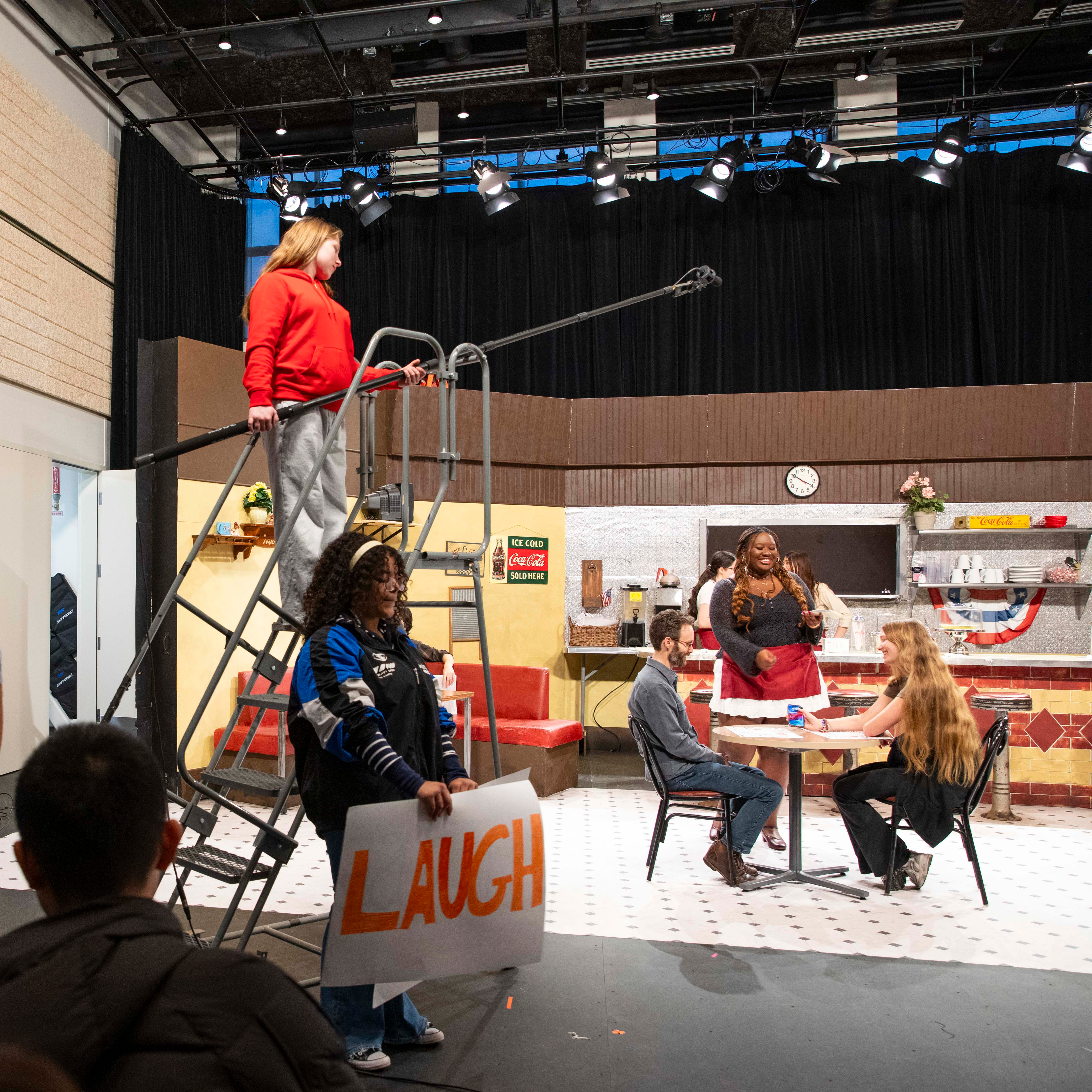
In Concord Academy’s Centennial Arts Center (C.A.C.), a small soundstage has been transformed into a vintage diner. Café tables and chairs sit atop a checkered floor, and rust-colored barstools are lined up along a counter whose chrome edge gleams in the warm glow from overhead lights.
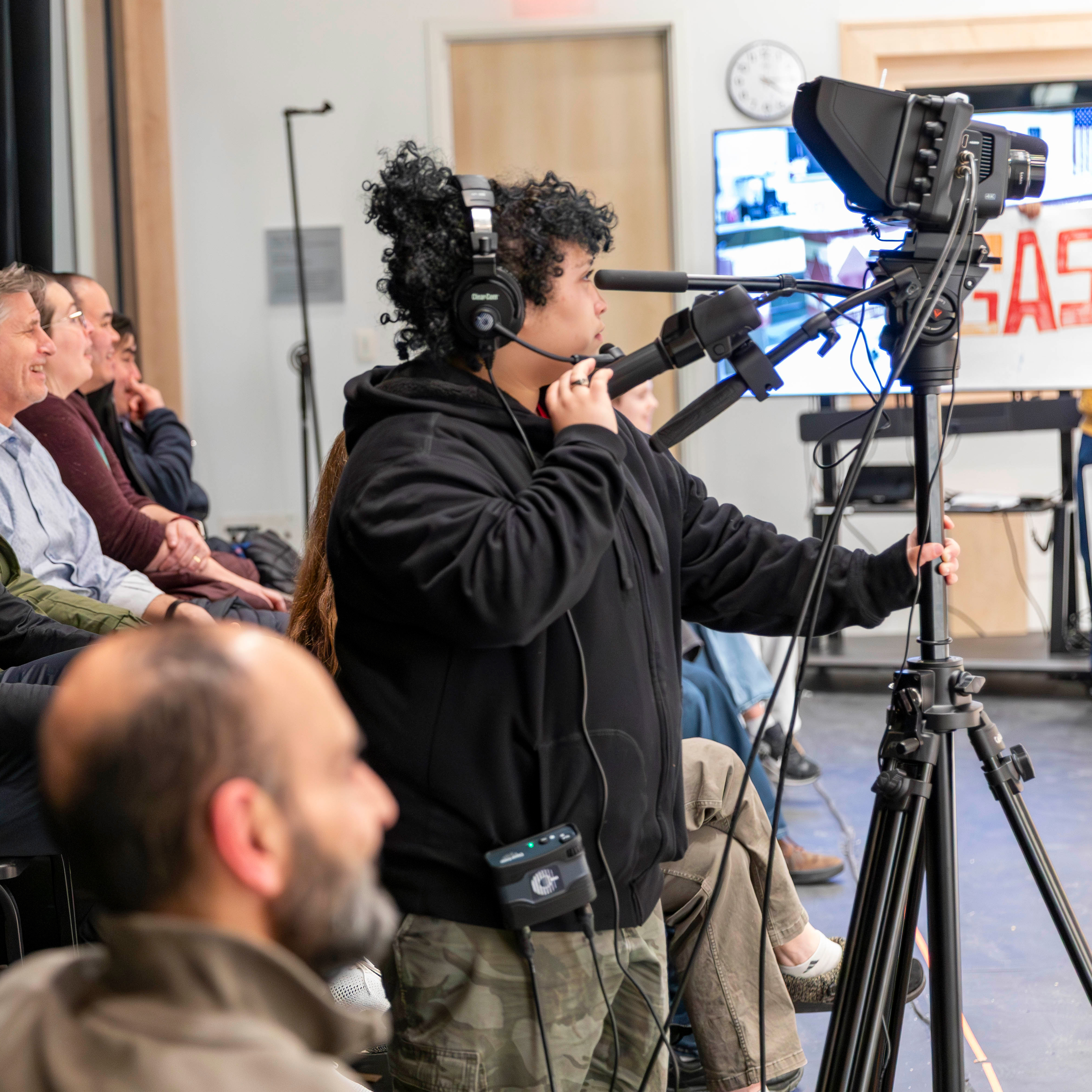
One student crouches behind a camera, adjusting focus. Another lifts a boom mic into place. An actor runs a few last lines at the counter. Then the student director calls out, “Rolling!”
“In case you haven’t noticed, business hasn’t exactly been booming lately,” the actor deadpans.
A beat. Then, on cue, a tumbleweed drifts across the floor.
Chuckles, snorts, and full-throated laughter erupt from the audience, and also from the crew behind the cameras. It doesn’t take long for the boundary between spectator and participant to dissolve in a flurry of rolling takes. To the side, a monitor plays a live feed of the action. Tension builds as a crew member flashes cue cards—“laugh,” “aww,” “gasp!”—every few seconds.
“Cut!” the director yells.
The crew resets for a second take. Chatter ripples across the audience. A curated playlist kicks in—managed, like everything else about this production, by students. “I love this song,” an audience member exclaims as a Billy Joel track blares through the speakers. At the diner counter, an actor grabs a spatula and, for a moment, turns it into a microphone, crooning along.
“Quiet on set,” the director calls, and the next take rolls, the scene now familiar but still funny.
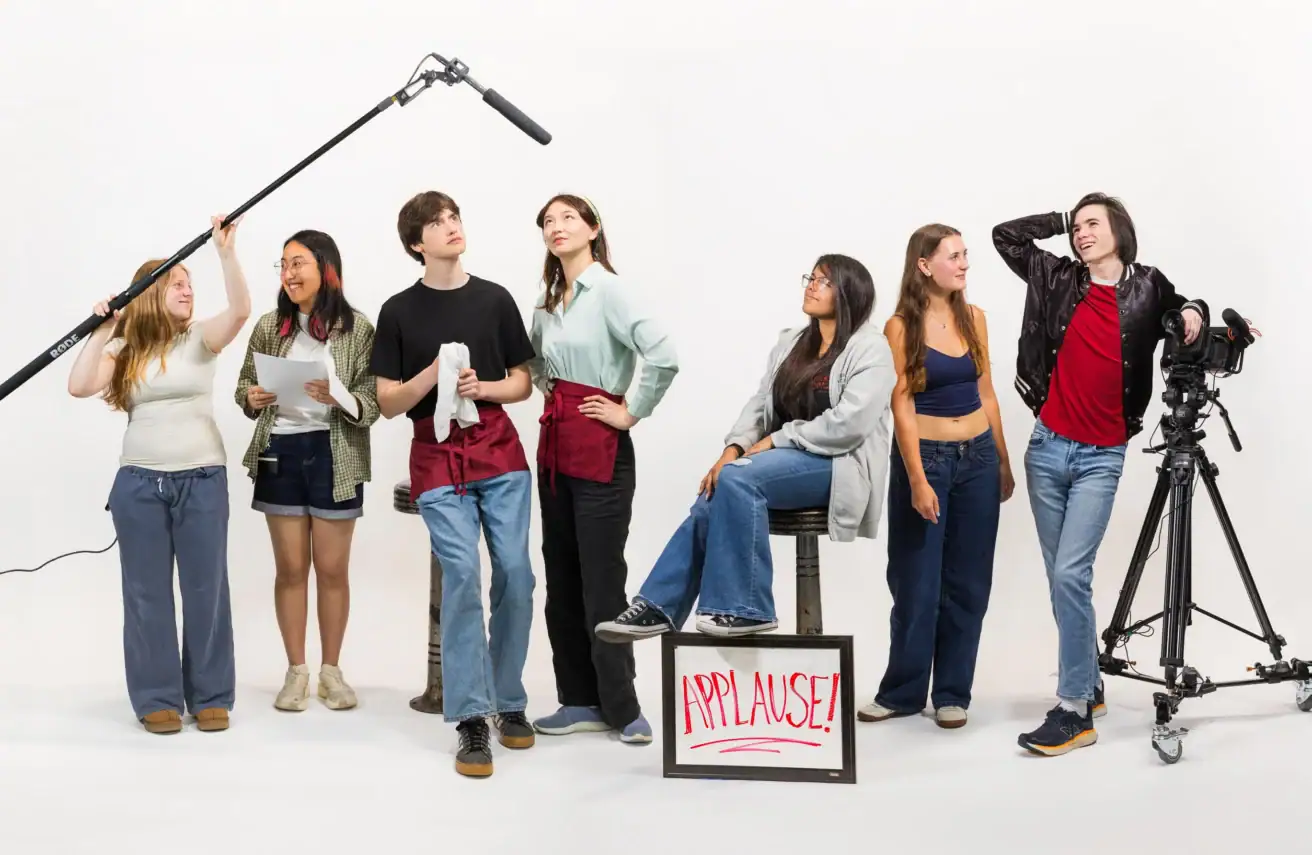
This is Cackleberries, a sitcom CA students wrote, acted in, directed, and filmed this year, following a process modeled on professional TV production. A collaborative effort through and through, the series involved more than 30 student artists.
From Premise to Pitch
In fall 2025, CA launched the new class the Sitcom Project: Writing and Acting for Television. Teaching a section each, film teacher Justin Bull P’25 ’28 and theater teacher Shelley Bolman P’27 guided students through the process of writing episodic stories. This winter and spring, a group of students, including many from the class, brought several of those scripts to fruition on screen.
The Sitcom Project builds upon the Feature Film Project, a course CA offers every other year in which students create a feature-length film. The resulting films have spanned multiple genres, and Bull, who teaches the class, saw sitcoms as a natural next step given their popularity on streaming platforms.
As the C.A.C. was under construction, Bull’s idea was likewise taking shape. The new facility’s Spencer and Colton P3 (Process, Presentation, and Production) Lab introduced a setting ideal for filmmaking, with grid lighting, dedicated space for a standing set, and the Rasmussen Digital Production Lab.
When the film program moved from the Math and Arts Center to the C.A.C. this academic year, Bull also saw an opportunity for interdisciplinary collaboration. “The sitcom is an interesting Venn diagram of film and theater,” he says. “There’s a traditional rehearsal process, a live audience, and it’s shot chronologically.”
To bridge these programs, Bull turned to Bolman for his expertise in acting and directing. The two aligned closely on curriculum and execution, drawing from a course on writing for television that Bull and English teacher Andrew Stevens offered several years ago and incorporating lesson plans from Bolman’s playwriting class. The 24 students enrolled in the 15-week course began by learning the fundamentals of sitcom writing. They analyzed scripts from popular sitcoms, including Seinfeld, Freaks and Geeks, and Black-ish, to identify plot structure, character archetypes, and objectives.
Early in the semester, both sections met together during a daylong symposium to develop a story. Bolman led acting exercises that emphasized the importance of ensemble work, giving students the beginning and end of a scene, for example, and asking them to improvise the middle.
“That physical approach to acting really sparks ideas, while giving people the freedom to be playful, take risks, and fully embrace the fun,” Bolman says.
The students generated hundreds of ideas, which they organized on a digital whiteboard before narrowing them down. After much debate and several rounds of voting, they determined a tone, a cast of characters, and the setting: Cackleberries, a struggling diner in a New Hampshire resort town.
After the symposium, Bull and Bolman compiled a “show bible” that outlines each character’s defining traits: Nina, an MIT grad, channels her passion for science into concocting elaborate coffee drinks. Blair, the hostess, is more interested in cultivating her Instagram following than serving customers. Trent, a delivery driver, adds oddball energy that unites the crew. Unemployed Ray, a regular customer, practically lives at Cackleberries. And Jo, the fiery short-order cook, keeps the operation running with tough love and her catchphrase: “Get the hell out of my diner!”
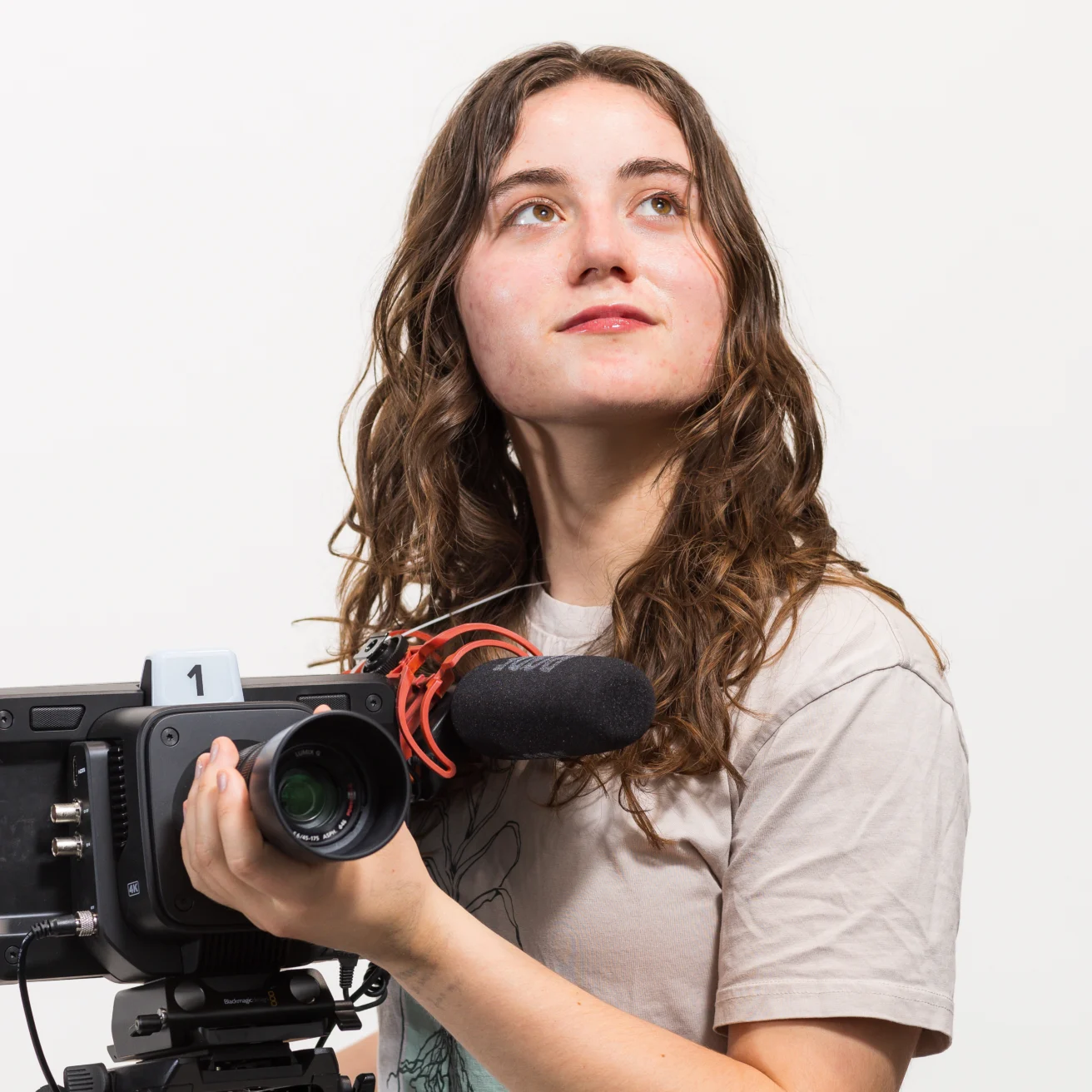
Back in class, each student brainstormed an “engine,” or premise, for an episode, which they pitched to their peers. They wrote “cold opens,” the short scenes that hook the viewer before the opening credits, then drafted a full script of about 30 pages, or around 15 minutes.

The Punch-Up
The 12 members of Bull’s class flip to the first scene of a script they will discuss today. “Terminally Online” is an episode about Danny, a waiter and aspiring writer, whose growing fixation on online criticism is driving him into a spiral of self-doubt. The conversation heats up quickly:
“What if the whole situation escalates into something totally absurd?” one student asks.
“What if the person he mistakes for the internet troll at the diner is a child?”
“What if he tries to confront the little kid and it turns into a full-blown showdown?”
This revision process, known as a “punch-up,” is where the story comes to life—outside the brain of a solitary writer, with input from the entire team.
“The writers’ room requires that you work with everybody, that you trust everybody, and that you are willing to put yourself in somebody else’s shoes.” — Shelley Bolman P’27, theater teacher
The students’ approaches to humor went far beyond superficial jokes, he adds: “They brought their personal experiences to bear through the medium of comedy. One of the things comedy does is disarm us; it makes us more open to what we’re hearing.”
Students crafted storylines around timely issues in ways both funny and relevant. In one episode, when the diner faces a corporate takeover, the colleagues turn against one another, competing to keep their jobs. Other episodes tackle the threats of artificial intelligence and social media addiction through the lens of absurdity.
Grace Goodman ’27, who played Jo, the cook, wrote “Terminally Online,” drawing from her experience leading CA’s No Social Media November student movement. She says the writers’ room format challenged her, but made her a better writer: “It forced me to consider all angles. I had to take a big-picture idea and condense it into a short episode that could carry a message and connect with people. ”
Bull and Bolman say all 24 completed scripts were strong; based on cast size and set limitations, they selected the eight best suited for filming.
Places, Everyone
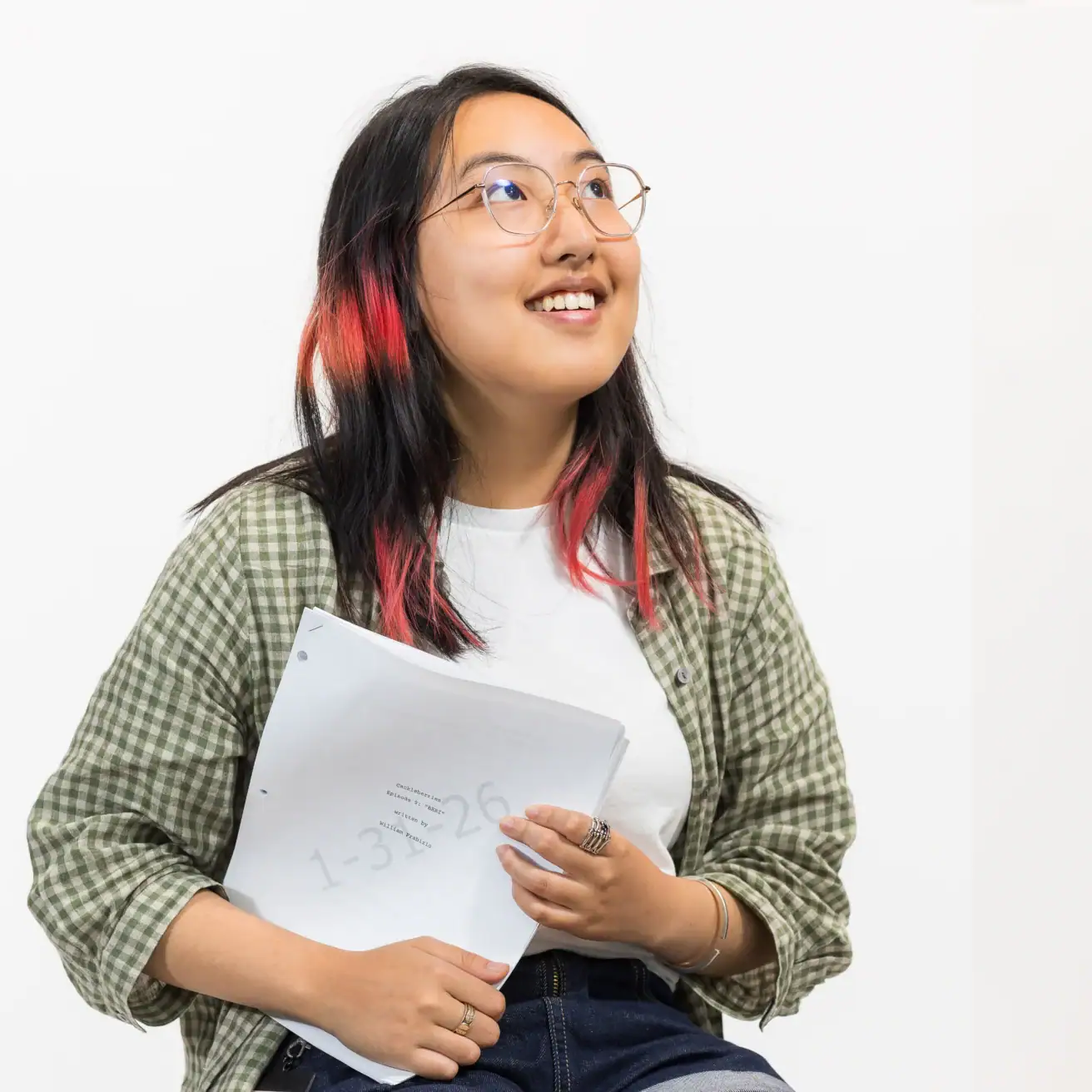
Beginning in winter 2026, the Cackleberries cast and crew of around 30 students plunged into a demanding after-school production schedule, filming an episode every week for two months. Mondays and Tuesdays were devoted to rehearsals, Wednesdays and Thursdays to three-camera-format taping, and Fridays to table readings for the next week’s episode.
Actors largely self-directed their rehearsals, receiving periodic feedback on blocking and delivery from Bull and Bolman. Many of them, used to performing on stage, faced a new challenge in acting for film as well as a live audience. They had to adjust their approach for the camera, delivering more nuanced performances.
It took a team to create a cohesive set, with guidance from faculty members, including sound advisor Nate Tucker, technical director James Williston P’28, and set designer Jessica Cloutier-Plasse. Wesleyan University student Micah St. George ’25 designed the lighting that gave the show its distinctive mood.
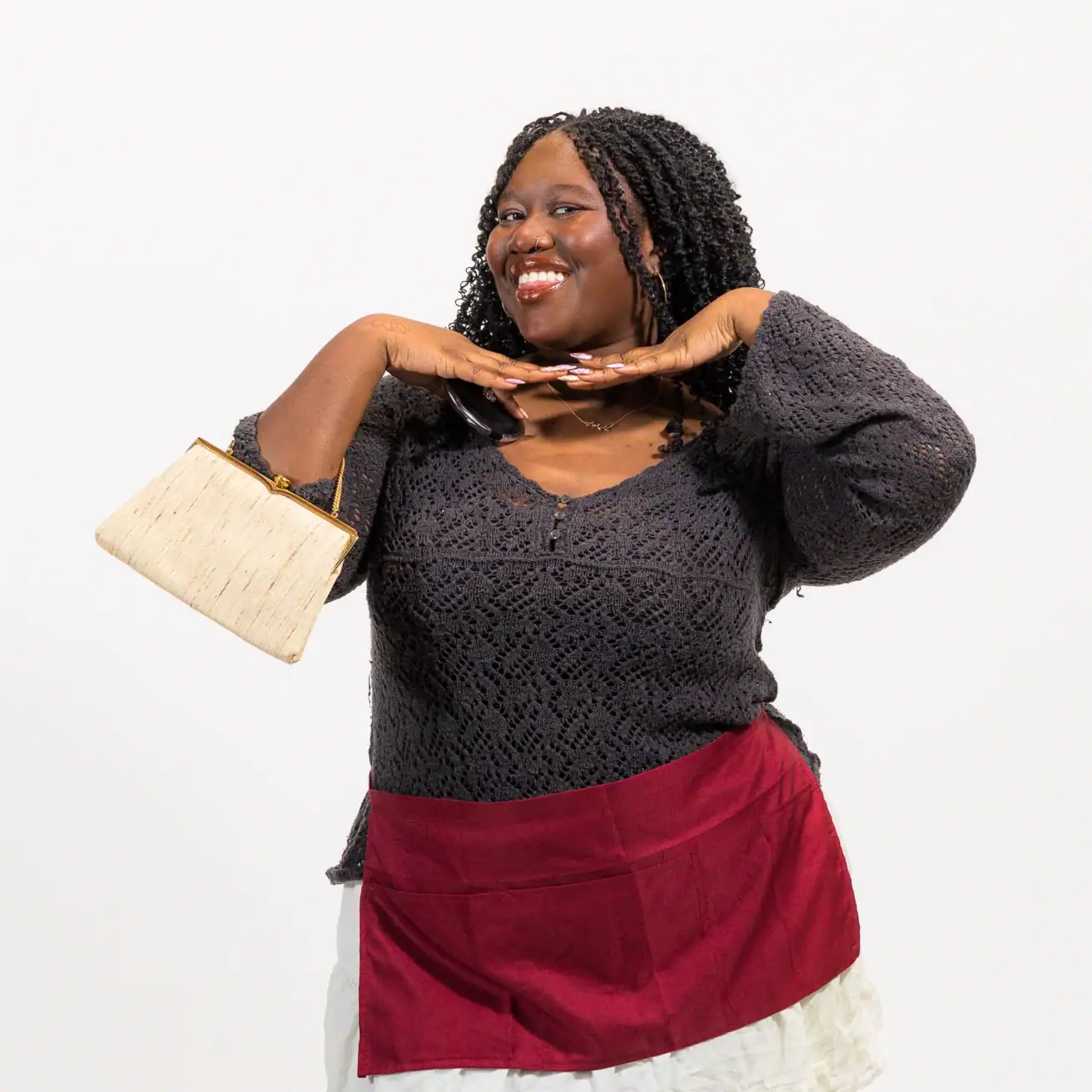
China Santos ’27 designed props and costumes. In the wardrobe, she worked closely with actors to align outfits with each character’s personality. To determine which props were needed, China carefully analyzed scripts, then sourced or crafted the set pieces. The most complex object she created was a retrofuturistic A.I. robot fashioned from a torn-apart tape editor, tubes, an old keyboard, and an LED-lit screen.
“The experience gave me a lot of confidence in my creative decisions,” China says. “It was really fun to make things and find solutions to the problems we had.”
Bull served as the showrunner, the lead creative and production manager who ensures consistency across episodes. He began the process by organizing a weeklong “sitcom bootcamp,” helping students learn to use the cameras and sound equipment through mock tapings.
Olivia Kim ’26, who wrote the episode “Running out of Steam,” served as a technical director. From the control room, she operated the video switcher, selecting camera shots, graphics, and video feeds to shape the story in real time as the taping took place. “I had a lot of fun working with Justin, who’s been in the professional film industry, and just seeing how everything works on set,” she says. “I thought it was incredibly impressive how we were able to put each episode together in a week.”
Sometimes the schedule was even tighter than that. Weather-related delays and illnesses created compressed timelines within an already tight academic calendar. After back-to-back snow day cancellations, the team shot the final two episodes in a single week.
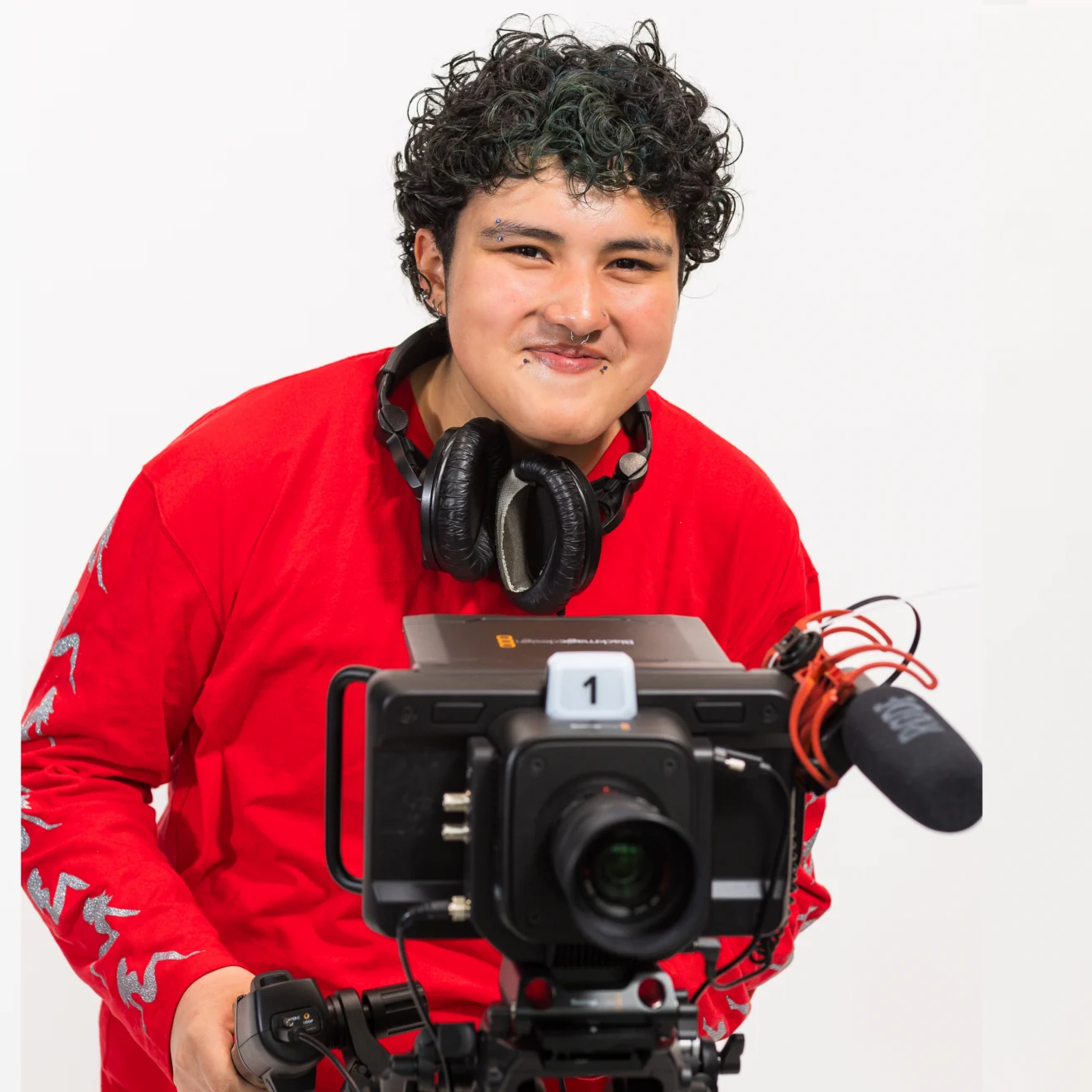
They had the equipment to pull it off. The crew used sound-canceling headsets to communicate, and they adjusted camera angles on the fly. “The process taught me that so much depends on collaboration,” says camera operator Daniel Peregudov ’27, who also co-wrote the final episode. “Even when it seems like it’s mostly about technical skills, that’s not the whole picture. Everyone has to work together seamlessly.”
Over the eight weeks of filming, CA students, faculty, staff, and alums joined the audience. Some also made cameo appearances in various episodes.
Each week, after taping wrapped, Bull led post-production, the final stage of filmmaking. Working from a rough cut assembled by the technical director, he selected the best takes and created a complex sound mix, then handled the credits and color grading, polishing each episode for its debut.
Greenlit
CA released Cackleberries episodes weekly on YouTube from January 23 to March 27. By the end of the school year, the series premiere alone had been viewed nearly 1,000 times.
“We’re so proud of the tremendous amount of expertise and dedication our students and faculty across departments have put into this experience,” says Sarah Yeh P’24 ’27, associate head for teaching, learning, and faculty. “It’s been stunning to see students operating cameras like professionals.”
This spring, the school greenlit the Sitcom Project as a staple of CA’s film program, to be offered, in alternate years, along with the Feature Film Project. The feature-length filmmaking experience, spearheaded by Bull and fellow film teacher Ben Stumpf ’88 is open to juniors and seniors, as is the Sitcom Project. Interspersing feature-length and serialized comedy formats will allow older students to take part in both, increase their opportunities to get involved in film during their time at CA.
Bull is eager to evolve the Sitcom Project. In the future, he plans to begin the semester by providing students with a complete story bible to ensure consistency and maximize their writing time. He also sees opportunities to involve students in the musical score and film editing.
“I find great joy in making art with others, and that’s why I love filmmaking,” he says. “I hope students step away from this process realizing that when collaboration, communication, and creativity come together, you can bring even the most impossible ideas to life.”