
A Critical Time for Queer Media: Adam Goldman ’04 Has Started a Foundation to Support LGBTQ+ Creators
By Nancy Shohet West ’84
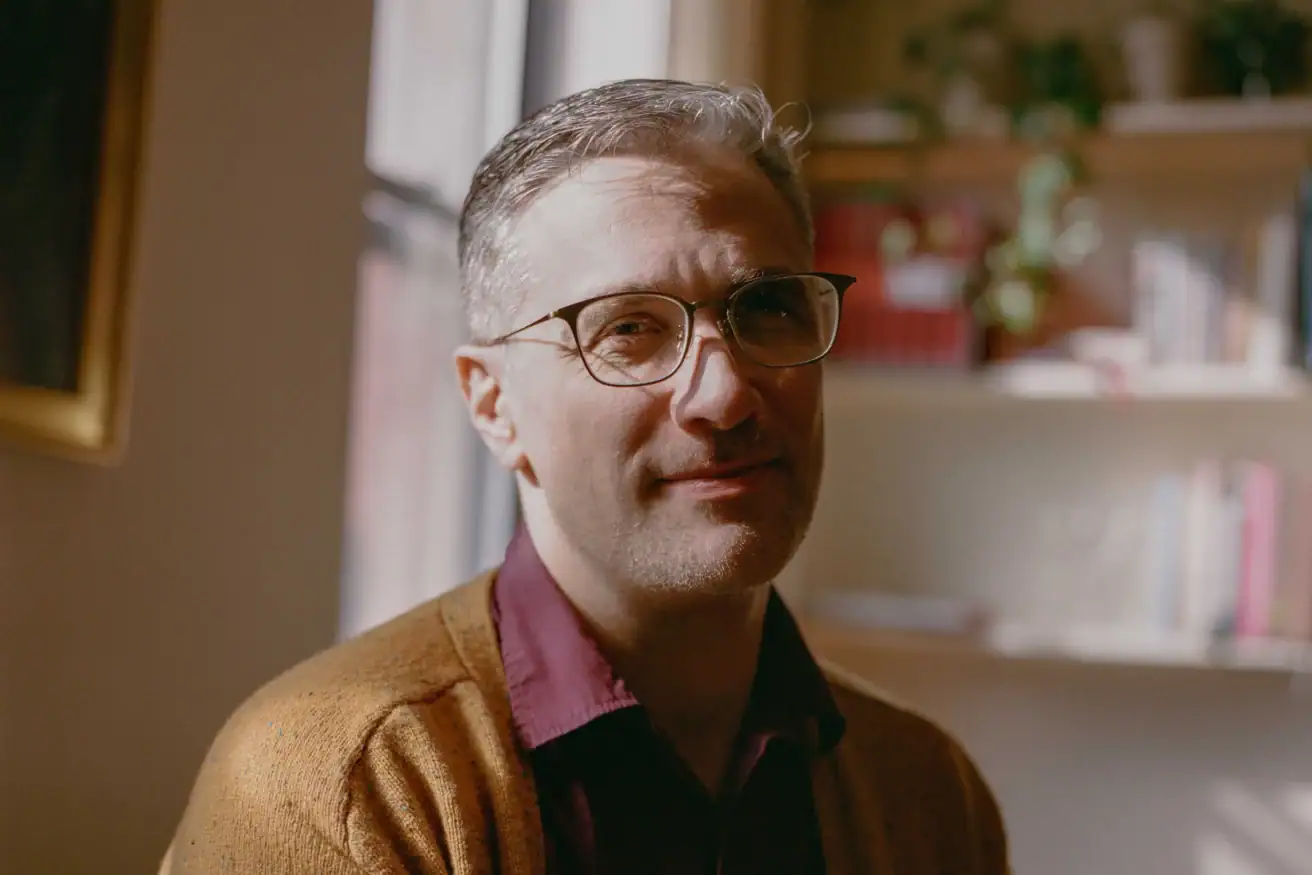
“In my career, my successes have come from making things that should have existed,” says writer and director Adam Goldman ’04.
An avid theater student at CA, once called “iconoclastic and contrary,” he realized he was better at creating works than reading parts in plays. Goldman graduated from Bard College with a BFA in theater and has created a web series, a scripted podcast, and, in 2025, a foundation to support the next generation of queer filmmakers.
His first major project, The Outs, appeared on Vimeo for two seasons beginning in 2012. He describes it as a simple story about an emotionally wrenching breakup between two men. More challenging at the time than writing a series featuring gay characters was selling the public on the idea of a streaming series. “It was a moment when people were saying to me, ‘No one wants to watch TV on their laptops,’” Goldman says. But he and co-creator Sasha Winters disagreed, and they “made a bet that if you make something good, people will want to watch it.”
Netflix launched House of Cards, considered the first major success by a streaming network, a little less than a year after The Outs debuted, and Goldman had his proof. Not only did people watch his show, they also responded to it on a profound level. Goldman’s early fan mail included a note from a Mormon teen in Utah. “He said that watching The Outs showed him a version of life that allowed him to imagine a possible future for himself,” Goldman says.
He soon learned that The Outs had at least one very high-profile fan after stage and film icon Alan Cumming tweeted about it. “I freaked out,” Goldman says. “Once I calmed down, I tweeted back to Alan, and we made plans to get together for coffee.” Cumming asked to be written into a scene, and the two have been friends ever since. When Cumming co-hosted the Tony Awards with Kristin Chenoweth in 2015, Goldman was a scriptwriter for the broadcast.
Goldman’s next major project was Hot White Heist, a scripted podcast series picked up by Audible in early 2020. “Right after we shook hands on it, the pandemic lockdown began,” Goldman recalls. “Suddenly, all of these major actors were trapped at home with time to do smaller projects. We put together an incredible cast that included Bowen Yang, Cynthia Nixon, Margaret Cho, Tony Kushner, and Sir Ian McKellen. It started out as a very silly and jokey premise, but underneath it was a serious question about what queerness means and how it is evolving.”
Despite the high visibility of stars like Yang and Nixon, as well as the popularity of series that center on gay relationships, from Schitt’s Creek to the recent breakout hit Heated Rivalry, a tide of repression has been sweeping through the media and the arts, Goldman says. Major studios including Disney, Amazon MGM Studios, Paramount, and Warner Bros. Discovery are publicly dialing back their commitment to diversity, equity, and inclusion, and even critically acclaimed shows from queer creators haven’t been renewed. GLAAD’s 2025 Studio Responsibility Index reports that the top 10 major film and TV distributors released 250 films in 2024, of which 23.6% include at least one LGBTQ+ character—a decrease of nearly 4% from the previous year.
Timing is critical. That decrease in investment in queer film and TV now will impact the next several years of media production. “Queer media is in crisis,” Goldman says. “It isn’t enough just to write roles for queer characters. We need to make it possible for young, early-career queer filmmakers to break into an industry that is increasingly hostile toward them.”
This realization led him to embark on his most recent endeavor, the Necessary Foundation, which provides funding and mentorship to emerging filmmakers in the LGBTQ+ space. “I was in a state of utter despair after the second election of Trump,” Goldman says. “And then I came up with the idea of starting a foundation.” Cumming signed on as a co-founder, as did Yang and actor, writer, and producer Lena Waithe.
The Necessary Foundation aims to help creators reflect the full spectrum of experiences for the queer community. It will provide financial support for young filmmakers to tell the stories they want to tell, without worrying about appealing to the mainstream. Grant recipients will also gain on-set production experience. “We will help them to get into film festivals and generate publicity,” Goldman says.
The foundation’s focus is still on fundraising, but the founders’ vision is that the community will rapidly grow into one that can sustain itself, with past recipients helping future ones. Goldman says, “We will help these artists grow into industry-leading talents.”